 Meme Insider
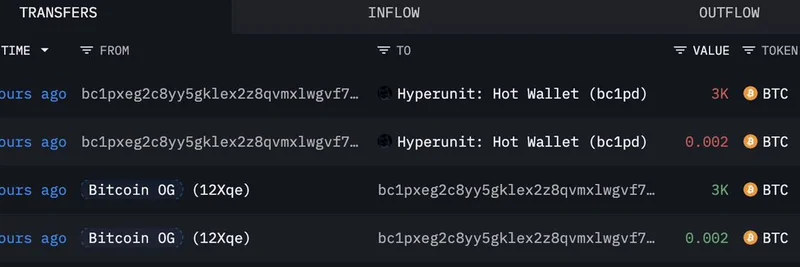
In the ever-volatile world of cryptocurrency, big moves by whales—those massive holders who can sway markets—always grab attention. Recently, a tweet from on-chain analytics powerhouse Lookonchain highlighted a jaw-dropping transaction: a Bitcoin "OG" (that's slang for an original gangster, or early adopter) sold 3,000 BTC for a whopping 363.87 million USDC on Hyperliquid, at an average price of $121,291 per BTC. This isn't just any random sale; it's part of a larger pattern that's got the crypto community buzzing.
Unpacking the Transaction
For those new to the scene, Bitcoin OGs are folks who mined or acquired BTC back in the early days, often holding onto it for years without touching it. This particular whale has been active lately, but this move stands out. According to Lookonchain, the seller previously offloaded 35,991 BTC (now valued at around $4.43 billion) to snag 886,371 ETH (currently worth about $3.99 billion). Now, shifting to USDC—a stablecoin pegged to the US dollar—suggests a potential pivot to more stable assets or perhaps gearing up for other investments.
The transaction trail, visible on platforms like Arkham Intelligence, shows the BTC moving from an old address to an intermediate wallet before landing in Hyperliquid's hot wallet. Hyperliquid, if you're not familiar, is a cutting-edge decentralized exchange (DEX) specializing in perpetual futures trading on its own Layer-1 blockchain. It's known for lightning-fast speeds and low fees, making it a hotspot for serious traders.
You can check out the original tweet from Lookonchain for the full details, including links to the wallet addresses on Arkham and Hyperliquid's explorer.
The Bigger Picture: From BTC to ETH and Now USDC
This isn't the whale's first rodeo. Over the past couple of months, they've been systematically converting BTC to ETH on Hyperliquid. Starting around August 20, 2025, they've executed multiple large swaps, building up a massive ETH position. But why the switch to USDC now? USDC is often used as a bridge to other assets or to park funds safely during market uncertainty. With Bitcoin hitting new highs above $126,000 recently, cashing out some gains makes sense.
Speculation is rife: Is this whale bearish on BTC in the short term? Or are they preparing to dive into altcoins, including the wild world of meme tokens? Meme tokens, those fun, community-driven cryptos like Dogecoin or newer viral ones, often thrive on liquidity injections from big players. If this USDC pile gets funneled into meme perps or spot trades on platforms like Hyperliquid, it could spark some serious volatility.
Implications for Meme Token Traders
At Meme Insider, we're all about meme tokens, so let's connect the dots. Hyperliquid isn't just for BTC and ETH; its ecosystem supports trading a variety of assets, including perpetual contracts on trending tokens. If this whale uses their USDC to go long on meme tokens or related derivatives, it could pump liquidity and hype into the sector.
On the flip side, if they're exiting BTC for stables, it might signal caution amid broader market trends. Bitcoin's recent surge has lifted many boats, but meme tokens are notoriously sensitive to whale movements. Traders should keep an eye on Hyperliquid's order books and on-chain flows to spot any follow-up actions.
For context, this whale still holds a staggering 49,634 BTC across four wallets, worth over $5.43 billion at current prices. That's enough firepower to influence markets significantly.
Why This Matters in the Meme Token Ecosystem
Meme tokens rely on momentum, community, and sometimes, big money inflows. Moves like this remind us how interconnected the crypto space is—BTC whales can indirectly boost or bust meme rallies by shifting capital. If you're building or trading memes, tools like Lookonchain and Arkham are essential for staying ahead.
Stay tuned to Meme Insider for more updates on whale activities, on-chain insights, and how they tie into the meme token universe. If you've got thoughts on what this whale might do next, drop them in the comments!