 Meme Insider
If you've ever dipped your toes into Solana development, you know it's a powerhouse for meme tokens and fast-paced blockchain projects. But let's be real—getting started often felt like chewing glass, thanks to the need for custom Rust toolchains and non-standard commands. Well, that era might just be over, courtesy of an exciting announcement from Blueshift.
The Big Reveal from Blueshift
In a recent thread on X (formerly Twitter), Blueshift announced a major step forward for Solana devs. They've created tools that let you build Solana programs using plain old nightly Rust, without relying on forked versions of Rust or LLVM. This means no more wrestling with proprietary setups—just the familiar Rust ecosystem you're already comfortable with.
The highlight? A demo called the "upstream Pinocchio escrow," a simple Hello World-style program that showcases this new capability. It's built with upstream BPF (Berkeley Packet Filter), which Solana uses for its smart contracts, but now linked via a custom tool called sbpf-linker. Zero changes to the Solana protocol, and it's all open source.
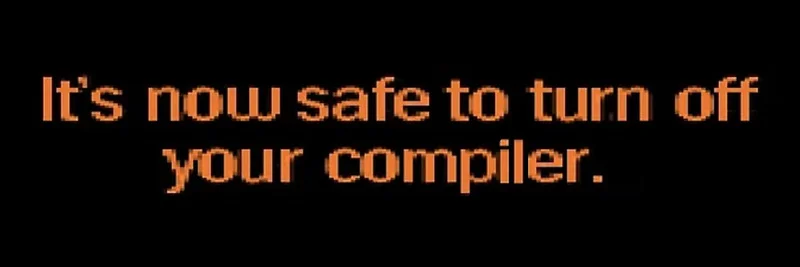
As the meme in their post humorously puts it: "It's now safe to turn off your compiler." No more custom compilers bogging you down.
Check out the original thread by Blueshift and Alessandro Decina's enthusiastic quote, where he calls it the end of "glass chewing" in Solana dev.
Breaking Down the Tech: Simple Explanations
Let's unpack this without the jargon overload. Solana smart contracts (or "programs") are written in Rust and compiled to BPF, a virtual machine format that's secure and efficient for blockchain. Historically, Solana maintained its own forks of Rust and LLVM (the compiler backend) to support this, which meant devs had to install special versions and learn quirky commands.
Blueshift's innovation? They've upstreamed the BPF support, meaning it's now part of the main Rust project. With their sbpf-linker, you can take a standard Rust build and convert it to Solana's SBPF V0 format. SBPF is Solana's tweaked version of BPF for better performance.
To try it:
- Install the linker:
cargo install sbpf-linker - Build your program:
cargo +nightly build-bpf - Test it:
cargo test
It's that straightforward. For a hands-on example, head to their upstream Pinocchio escrow repo or the sbpf-linker repo. Contributions are welcome!
Why This Matters for Meme Token Enthusiasts
Meme tokens thrive on Solana because of its speed and low fees, making it perfect for viral launches and community-driven projects. But building custom features—like token escrows, automated trading bots, or even NFT integrations—often required jumping through dev hoops.
With standard Rust tools, more developers can jump in without the steep learning curve. Imagine Rust pros from other ecosystems easily porting ideas to Solana. For meme token creators, this could mean faster iterations, more innovative utilities (think gamified tokens or AI-driven memes), and ultimately, stronger communities.
Blueshift, known for top-tier dev training from Solana core contributors, is positioning itself as the go-to for leveling up your skills. Their free courses could pair perfectly with these new tools.
Looking Ahead
This shift aligns with open-source ethos, giving back to the Rust community instead of forking away. As Alessandro Decina, a key figure in Solana dev, noted, it's been his vision for a seamless developer experience.
If you're building meme tokens or just curious about Solana, keep an eye on Blueshift. This could spark a wave of new projects, making the ecosystem even more vibrant. Got thoughts? Drop them in the comments or join the discussion on X.