 Meme Insider
In the fast-paced world of Solana DeFi and meme tokens, buybacks have become a hot topic. A recent thread on X from @FabianoSolana dives deep into why simply buying back tokens isn't enough to sustain long-term value, especially when projects like Pump.fun are making massive moves. Let's break it down and see what it means for meme token enthusiasts and blockchain practitioners.
The Spark: Pump.fun's Massive Buyback
The conversation kicked off with a post from @ashen_one, highlighting Pump.fun's eye-popping $200 million buyback—about a third of their $600 million raise. For those new to this, Pump.fun is a popular platform on Solana for launching meme coins quickly and fairly. Their token, PUMP, has seen aggressive buybacks funded by platform revenue, with reports showing they've already repurchased over $175 million worth as of late 2025.
But as ashen_one points out, even huge buybacks like this haven't always propped up prices as expected. It's led to questions about whether that capital could be better spent elsewhere, or if the market just isn't responding to traditional supply-control tactics anymore. They even nod to an "avicci 'frick the VCs' approach," suggesting a more rebellious, community-focused strategy over relying on venture capital influences.
FabianoSolana's Take: Buybacks Need More Muscle
FabianoSolana quotes this and agrees that buybacks alone "don’t do shit," but sees them as a solid foundation. The real problem? Ownership. Who truly controls those repurchased tokens? Often, it's chalked up to "the DAO" (Decentralized Autonomous Organization), but without legal teeth or enforceable protections, that's more hope than reality.
This is where things get interesting. Fabiano highlights @MetaDAOProject, which is pioneering futarchy—a governance model that uses prediction markets to make decisions. Think of it as betting on outcomes to guide project choices, ensuring they're market-driven and holder-aligned. It's a step toward making DAOs more accountable.
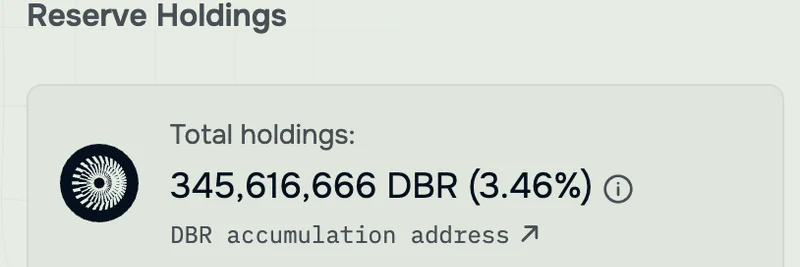
He's bullish on projects like deBridge (a cross-chain bridging protocol) and Pump.fun because they could realistically buy back 10-20% of their supply annually. deBridge, for instance, has been accumulating its DBR token steadily.
As shown in the screenshot from the thread, deBridge's reserve holds over 345 million DBR, representing about 3.46% of the total supply. This kind of accumulation signals commitment, but Fabiano argues we need to evolve further.
The Path Forward: From Buybacks to True Ownership
Fabiano envisions a future with three key elements:
Regular Buybacks: Reducing circulating supply to potentially boost value.
Futarchy for Protection: Using prediction markets to enforce decisions that benefit holders.
Legally Owned Treasuries: Making sure buybacks and reserves are truly owned by token holders, not just in name.
At that point, he says, smart projects will ditch the vague "utility token" label and adopt structures that mimic equity—giving holders real stakes and rights.
He also shared a chart comparing DBR's performance against majors like BTC and SOL, showing relative stability amid market dips.
This visual underscores why deBridge's approach, including buybacks, has kept it more resilient.
What This Means for Meme Tokens
For meme token creators and traders on platforms like Pump.fun, this thread is a wake-up call. Meme coins thrive on hype, but sustainability comes from mechanics like buybacks paired with governance innovations. If Pump.fun continues its buyback spree—already hitting milestones like $150 million in repurchases—it could set a standard for how meme ecosystems reward communities.
Projects ignoring holder protections risk fading into irrelevance. As blockchain tech matures, expect more integration of futarchy and legal frameworks to bridge the gap between DeFi promises and real-world enforcement.
Community Reactions and Broader Implications
Replies to the thread echo the sentiment. One user notes deBridge's buybacks are working, with the token holding steady. Others question legal ownership in DAOs, highlighting the social-versus-legal control divide. It's clear the community wants more than just token burns or buybacks—they crave enforceable rights.
If you're diving into meme tokens or Solana DeFi, keep an eye on how projects like Pump.fun and deBridge implement these ideas. They could redefine what "community-owned" really means in crypto.
For more insights on meme token trends and DeFi strategies, check out our knowledge base at Meme Insider. What's your take on buybacks—game-changer or temporary fix?