 Meme Insider
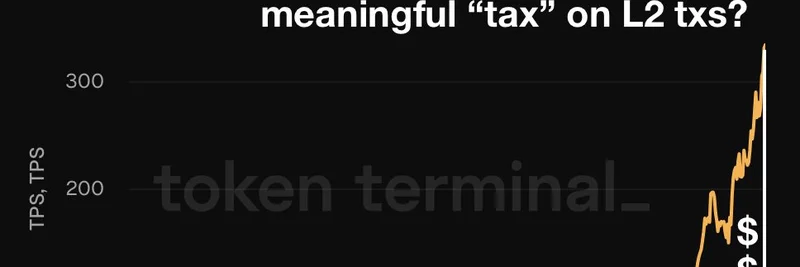
In the fast-paced world of blockchain, Ethereum remains a powerhouse, but its scaling solutions—known as Layer 2 (L2) networks—are stealing the spotlight. A recent tweet from Token Terminal has sparked a lively discussion: Can Ethereum slap a meaningful "tax" on L2 transactions? Let's break this down and see how it ties into the wild world of meme tokens.
The tweet features a striking chart comparing transactions per second (TPS) on Ethereum's main network (Layer 1 or L1) versus its L2 ecosystems. TPS is basically a measure of how many transactions a blockchain can handle every second—think of it as the speed limit on a digital highway. The visual shows Ethereum's TPS staying relatively flat over the years, while L2s have skyrocketed, handling hundreds more transactions as of 2024.
Token Terminal poses the question bluntly: "L2s scale Ethereum. Ok, so what? Can Ethereum implement a meaningful 'tax' on L2 txs?" They outline three perspectives:
It doesn't need to: Some view ETH primarily as a store of value (SoV), like digital gold, so extra revenue from L2s isn't crucial.
No, it's fixed: The current financial ties between L1 and L2s are set in stone, with L2s acting more like competitors than extensions.
Yes, via vertical integration: Long-term ETH optimists believe deeper merging of layers could allow for such a tax, capturing value from L2 activity back to Ethereum.
This debate isn't just academic—it's got real stakes for meme token enthusiasts. Meme coins, those viral, community-driven tokens often inspired by internet jokes or trends, thrive on high-speed, low-cost networks. Many popular memes like PEPE or newer ones on chains like Base (an Ethereum L2) rely on L2s for their explosive trading volumes. If Ethereum were to impose a tax on L2 transactions, it could trickle down to higher fees for users, potentially slowing the meme coin frenzy.
Why L2s Matter for Meme Tokens
Layer 2 networks, such as Arbitrum, Optimism, or Polygon, sit on top of Ethereum to batch transactions and reduce congestion. This means cheaper and faster trades, which is perfect for the pump-and-dump dynamics of meme tokens. Without L2s, Ethereum's high gas fees (the cost to process transactions) would make small trades uneconomical—imagine paying $10 in fees to buy $5 worth of a dog-themed coin.
The chart from Token Terminal highlights how L2s have boosted overall throughput, but Ethereum's base layer hasn't seen the same growth. Replies to the tweet add fuel to the fire. One user points out that L2s capture most of the value—like sequencer fees (rewards for ordering transactions) and MEV (miner extractable value, or profits from transaction ordering). They argue that without economic alignment, L2s won't willingly share revenue with Ethereum.
Another reply quotes Ethereum co-founder Vitalik Buterin: "A layer-2-centric ecosystem is sharding in a very real technical sense, but it's sharding where you can go create your own shard with your own rules." Sharding is a scaling technique that splits the blockchain into smaller pieces for efficiency. This suggests the Ethereum ecosystem is evolving into a fragmented yet interconnected web, where a "tax" could unify value capture.
Potential Impacts on the Meme Coin Scene
For blockchain practitioners diving into meme tokens, this discussion underscores a key tension: technical scaling versus economic capture. If Ethereum pushes for vertical integration—essentially owning more of the L2 stack—it could lead to a "tax" that funnels fees back to ETH holders. That might strengthen ETH's price but raise costs on L2s, making them less appealing for low-stakes meme trading.
On the flip side, if L2s remain independent, meme creators and traders could enjoy continued low fees, fostering innovation in the space. We've seen meme tokens explode on L2s due to their accessibility; a tax might shift activity to rival L1s like Solana, which boasts high TPS without layers.
Looking Ahead
As the crypto landscape evolves, keeping an eye on Ethereum's relationship with its L2s is crucial for anyone in the meme token game. Whether through taxes, integrations, or new protocols, the goal is sustainable scaling that benefits everyone—from devs building dApps to retail traders chasing the next viral coin.
For more insights, check out the original tweet and explore Token Terminal's data dashboard. Stay tuned to Meme Insider for the latest on how blockchain trends shape the meme economy.