Meme Insider
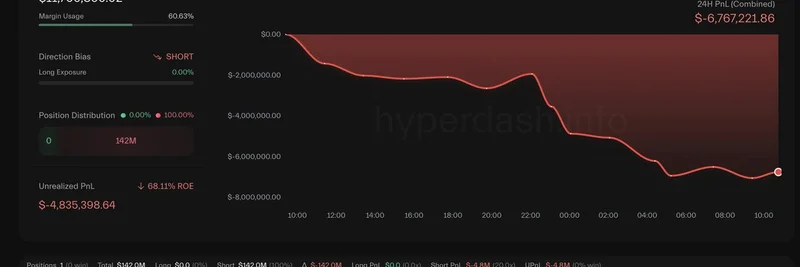
In the wild world of cryptocurrency trading, stories of massive wins and crushing losses are part of the daily grind. Recently, blockchain analytics firm Lookonchain spotlighted a fascinating case involving a big-time trader, often called a "whale" in crypto lingo—someone with huge holdings who can influence market movements. This whale, identified by the wallet address starting with 0x5D2F, had been stuck in a losing short position on Bitcoin (BTC) for almost five months.
For those new to the term, a short position means betting that the price of an asset like BTC will drop. You borrow the asset, sell it at the current price, and hope to buy it back cheaper later to pocket the difference. But if the price rises instead, your losses can pile up fast, especially with leverage, which amplifies both gains and risks.
The Market Crash Lifeline
A sudden market downturn gave this trader a golden opportunity. The crash allowed their position to flip from a staggering $27 million unrealized loss into a profit. Unrealized loss means the loss isn't locked in yet—it's just on paper until you close the trade. With BTC prices dipping, the short bet started paying off.
But here's where things get interesting: the whale didn't fully exit the position. Maybe greed kicked in, hoping for even bigger gains if the dip continued. Instead, the market rebounded sharply, as crypto often does. BTC prices climbed back up, turning that brief profit into a fresh $4.8 million loss.
Key Details from the Trade
- Position Size: The whale was shorting a massive amount, equivalent to about 1,231 BTC at one point.
- Liquidation Price: Set at $123,263. If BTC hits this level, the position could be automatically closed by the exchange to prevent further losses, potentially wiping out the trader's margin.
- Leverage: Around 12.13x, meaning small price moves have outsized effects.
- Platform: Based on the dashboard, it looks like a perpetual futures contract on a major exchange, allowing indefinite holding without expiration.
This isn't uncommon in crypto futures trading, where platforms like Binance or Bybit let users go long or short with high leverage. However, as this case shows, timing is everything.
Lessons for Meme Token Traders
While this drama unfolded with BTC, the king of cryptos, it holds valuable insights for anyone dabbling in meme tokens—the fun, volatile coins often driven by hype and community buzz on blockchains like Solana or Ethereum. Meme tokens can swing even wilder than BTC, with pumps and dumps happening in hours.
Cut Losses Early: Holding onto a losing trade hoping for a turnaround is a classic mistake. Set stop-losses to protect your capital.
Don't Let Greed Override Strategy: Breaking even after months of red is tempting to chase more, but markets don't care about your emotions. Take profits when you can.
Understand Leverage Risks: High leverage can turn a small bet into a fortune—or a disaster. For meme tokens, which lack BTC's liquidity, liquidation risks are even higher.
Stay Informed with Onchain Data: Tools like Lookonchain track whale moves in real-time, helping smaller traders anticipate shifts. If a whale dumps a meme token, it could signal trouble.
Events like this BTC short saga remind us that even seasoned players get burned. In the meme token space, where projects like Dogecoin or newer ones on Solana thrive on virality, similar rollercoasters happen daily. Keep an eye on market sentiment, use reliable analytics, and always trade with what you can afford to lose.
For more deep dives into crypto trends and meme token strategies, stick around on Meme Insider. What's your take on this whale's blunder? Share in the comments!