 Meme Insider
If you've been riding the meme token wave, the recent crypto crash on October 10, 2025, probably hit you like a ton of bricks. Prices plummeted, positions got wiped out, and terms like "auto-deleveraging" and "depegs" started flying around. But what really happened? Let's break it down, drawing from a key discussion sparked by Haseeb Qureshi, managing partner at Dragonfly Capital, in his X thread.
Haseeb kicked things off by asking for the best analytical write-ups on the crash, focusing on market microstructure, auto-deleveraging (ADL), and depegs. The crypto world had just endured a brutal 24 hours, with massive liquidations across exchanges. Replies poured in, but one standout was Doug Colkitt's detailed thread from Ambient Finance, which explained ADL in simple terms. It's a must-read for anyone trading perps, especially in volatile meme token markets.
What is Auto-Deleveraging and Why Does It Matter for Meme Tokens?
Auto-deleveraging is basically the last resort in perpetual futures (perps) markets when things go haywire. Perps let you bet on crypto prices with leverage, without actually holding the asset. Think of it as a big pot of cash where longs (betting on price up) and shorts (betting on down) balance each other out. When prices swing wildly—like in this crash—losing positions get liquidated if they run out of margin.
But if the market's too chaotic and there's no fresh capital to balance things, ADL kicks in. It forces profitable positions on the winning side to close, starting with the biggest, most leveraged ones. Doug compares it to an overbooked flight: first, they offer incentives to leave, but if no one bites, someone gets bumped.
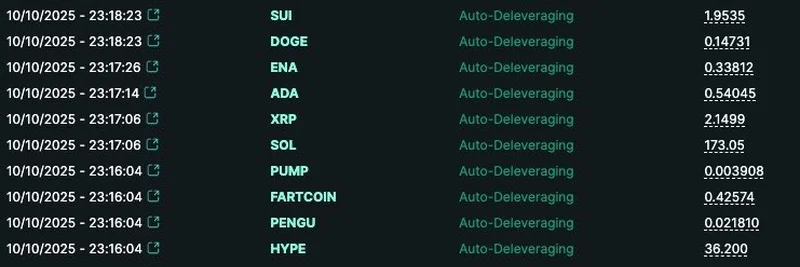
In the crash, this hit meme tokens hard. Check out this snapshot from the event:
You can see ADL triggering for favorites like DOGE (Dogecoin), WIF (dogwifhat), PUMP (likely tied to Pump.fun launches), FARTCOIN, PENGU, and HYPE. These are high-volatility plays, often pumped by community hype but prone to sharp drops. SOL (Solana) also shows up, which hosts many meme token ecosystems. The prices listed? Brutal—DOGE at $0.14731, WIF at $0.34100, and SOL dipping to $173.05 amid the chaos.
Depegs added fuel to the fire. Stablecoins like USDT or USDC sometimes lose their $1 peg during extreme volatility, messing with margin calculations and triggering more liquidations. In meme token trading, where leverage is king, this can cascade into a full-blown wipeout.
Lessons from the Crash: Risk Management for Meme Token Traders
One reply in Haseeb's thread nailed it: too much leverage chasing quick gains, without enough focus on capital preservation. Crypto trading, especially memes, often feels like a casino—fast wins, but faster losses. The crash exposed how automated bots and airdrop farmers amplified the sell-off, correlating with broader market fears like tariff wars.
For blockchain practitioners, here's the takeaway: diversify beyond pure leverage. Use stop-losses, understand funding rates in perps, and keep an eye on open interest. Meme tokens thrive on narrative and community, but crashes like this remind us that microstructure—the nuts and bolts of how markets function—can make or break your portfolio.
If you're building or trading in the meme space, threads like these are gold. They dissect real-time events, helping you level up. Stay tuned to Meme Insider for more breakdowns on how global events ripple through to your favorite tokens.
Wrapping Up: Building Resilience in Volatile Markets
The 2025 crash isn't the end—it's a wake-up call. As Haseeb put it, there's lots to dissect. By understanding ADL, depegs, and market dynamics, you can navigate future storms better. Whether you're in it for the memes or the tech, knowledge is your best hedge.