 Meme Insider
Ethereum's proof-of-stake network has come a long way since The Merge, but recent events remind us that decentralization isn't just a buzzword—it's a lifeline. On December 3, 2025, a tweet from Ethereum educator and investor sassal.eth (@sassal0x) went viral, spotlighting a nasty bug in the Prysm consensus client that knocked out nearly a quarter of the network's validators. If you're running a node or just dipping your toes into blockchain ops, this is your wake-up call to diversify your setup.
The Bug That Rocked the Validators
Picture this: You're staking your ETH, feeling good about contributing to the world's most secure smart contract platform. Then, bam—a software glitch in Prysm causes your validator to go dark. That's exactly what happened recently, with sassal.eth confirming that around 23% of Ethereum's consensus layer validators fell offline in a single hit. No drama, no hacks—just a plain old bug exposing the perils of over-reliance on one client.
Sassal's post cuts straight to the chase: "Turns out this data is accurate (we just had ~23% of the network fall off due to a bug with Prysm)." And here's the kicker: If that bug had hit Lighthouse, the dominant client holding 48.47% market share, the network could have lost finality entirely. Finality, for the uninitiated, is Ethereum's way of saying "this block is set in stone"—no take-backs. Losing it means chaos: stalled transactions, panicked DeFi traders, and a potential dip in ETH's price as confidence wavers.
Client Diversity: From Chart to Reality
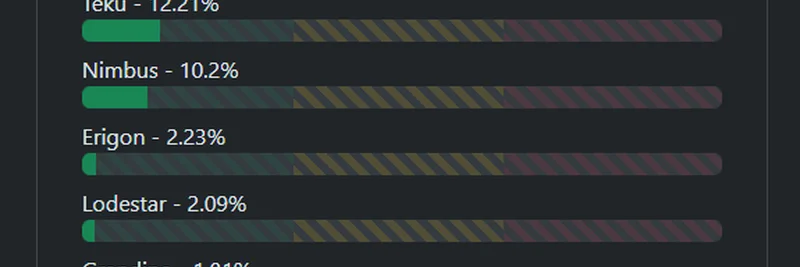
To drive the point home, sassal.eth shared a fresh chart from Miga Labs, Ethereum's go-to data wranglers for network health. It paints a healthier picture than last year, with improved spread across clients:
- Lighthouse: 48.47% – Still the big dog, but that dominance is a double-edged sword.
- Prysm: 22.71% – Down from its peak, but this bug shows why second-place isn't safe either.
- Teku: 12.21% – Steady Eddie from ConsenSys.
- Nimbus: 10.2% – Lightweight and loved by resource-conscious operators.
- Erigon, Lodestar, Grandine, and Others: Filling out the rest, proving smaller players matter.
The chart's cheerful "Client diversity has improved!" banner? Yeah, it's earned. Back in 2023, Lighthouse alone hovered near 60%, flirting with disaster. Today, no single client cracks 50%, which is why the Prysm hiccup was a near-miss, not a meltdown. Data like this, updated daily by Miga Labs, is gold for anyone serious about Ethereum staking.
Why Node Operators Need to Act Now
If you're a solo staker or running a big pool, sassal.eth's advice is blunt: "If you're a node operator (especially a big one) running Lighthouse, it's time to switch to a minority client. Do your part for Ethereum client diversity 🫡." He's spot on. Ethereum's ethos is anti-fragility—building a system that gets stronger under stress. Sticking with the majority client is like putting all your eggs in one basket; one bug, and you're out.
Switching isn't as daunting as it sounds. Tools like Dappnode or Avado make multi-client setups a breeze. Start small: Fire up a Teku or Nimbus instance alongside your Lighthouse. Test it on a testnet first to avoid any staking slashes. Resources from the Ethereum Foundation have step-by-step guides to get you rolling without the headache.
The Bigger Picture for Ethereum's Future
This Prysm bug isn't just a tech hiccup—it's a meme-worthy reminder (in the best crypto tradition) that diversity isn't optional. Remember the Solana outages? Centralized points of failure hurt. Ethereum's dodging that bullet thanks to folks like sassal.eth sounding the alarm early.
As we head into 2026, with Pectra upgrades on the horizon promising even smoother scaling, client diversity will be key to handling the load. Whether you're a practitioner chasing yields or a dev building the next big dApp, staying informed keeps you ahead.
Got thoughts on client runs or staking war stories? Drop them in the comments—we're building the ultimate knowledge base here at Meme Insider. And hey, if this sparked your interest in Ethereum's wild world, subscribe for more on the latest in meme tokens, tech deep dives, and blockchain lore. Stay decentralized, friends.