 Meme Insider
Privacy isn't just a nice-to-have in the world of blockchain—it's the missing piece that could finally unlock Ethereum's potential for everyday users. Imagine sending ETH or interacting with DeFi apps without exposing your entire financial history to the world. That's the promise of Kohaku, the Ethereum Foundation's bold new initiative to embed privacy directly into the wallets we already use, like MetaMask or Rainbow.
In a recent thread from 0xbow.io, a key player in Ethereum's privacy ecosystem, the vision for Kohaku is laid out crystal clear: mainstream adoption won't happen without privacy, and it can't be buried in some advanced settings menu. It has to be the default. As 0xbow puts it, "Privacy as the default in every wallet. Full stop." This isn't hype—it's a practical roadmap backed by open-source code and real-world demos.
What Makes Kohaku a Game-Changer?
At its core, Kohaku is an SDK—a software development kit—that hands wallet providers a Swiss Army knife of privacy tools. No need for users to switch to a "special" privacy wallet or jump through hoops. With one click, you get robust protection built right in. Here's a breakdown of the key features rolling out:
- Private Send and Receive: Use shielded balances via privacy pools (shoutout to integrations like Privacy Pools and RAILGUN) to hide transaction amounts and counterparties.
- Stealth Addresses: Automatically generate one-time addresses for Layer 1 transfers, making it impossible to link them back to your main wallet.
- Per-DApp Accounts: Isolate your activity across different apps—think separate compartments for your NFT flips and yield farming, keeping everything compartmentalized.
- Surveillance-Proof Light Clients: Ditch centralized RPC nodes that log your every move; Kohaku's built-in light client verifies everything on-chain without the Big Brother vibes.
- Advanced Reads with TEE+ORAM (and PIR on Deck): Fetch your private state data without revealing what you're querying—think Trusted Execution Environments combined with Oblivious RAM, evolving to Private Information Retrieval for even better efficiency.
- Social Recovery, ZK-Style: Recover your wallet using zero-knowledge proofs tied to your email (ZKEmail), passport, or even Anon Aadhaar, all without exposing sensitive info.
- Post-Quantum Security: Optional accounts with optimized verifiers to future-proof against quantum threats.
- Hardware Wallet Harmony: Seamless support for devices like Ledger or Trezor, plus a universal hardware standard for broader compatibility.
- Spending Policies: Set rules for your funds, like transaction limits or approved recipients, all enforced privately.
- Modular Plugins: Wallet teams aren't forced into an all-or-nothing deal. Start with basics like stealth addresses and layer on the rest as needed.
This modular approach is genius because it lowers the barrier for wallet developers. Why build privacy from scratch when you can plug into Kohaku's ready-made primitives?
From Prototype to Reality: The Kohaku Wallet Demo
To prove it's more than vaporware, the Ethereum Foundation forked the popular Ambire Wallet codebase into the Kohaku Wallet browser extension. This isn't your grandma's consumer app—it's an experimental powerhouse for tinkerers and devs. But don't let the "prototype" label fool you; it packs real heat.
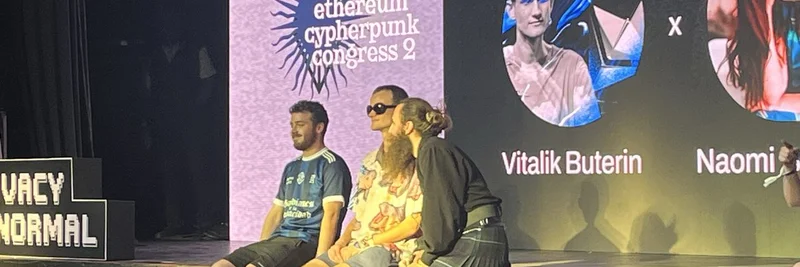
At Devcon in Buenos Aires, the team demoed seamless privacy in action: native swaps through Privacy Pools and RAILGUN, all without leaving the wallet interface. Vitalik Buterin, Kassandra, and Nico from the EF were on stage, showing how Kohaku turns public ledgers private without compromises. And if you're heading to EthCC 2026 in Paris (March 30–April 2), keep an eye out for a testnet activation—hands-on privacy awaits.
Check out this quick clip from the demo for a taste:
The thread also highlights a recent chat with Nico at Devcon, diving into Kohaku's roadmap: from current shielded transfers to the next 1-2 years of full-stack privacy, plus Nico's excitement for emerging tech like ZK proofs in social recovery.
Why This Matters for Meme Tokens and Beyond
Over at Meme Insider, we're all about the wild world of meme coins—those viral tokens that turn internet jokes into million-dollar ecosystems. But here's the rub: without privacy, every trade, airdrop claim, or LP addition is a billboard shouting your wallet address to the world. Snipers, front-runners, and doxxers thrive on that transparency. Kohaku flips the script, letting you ape into the next PEPE or DOGE without the paranoia.
Think about it: Per-DApp isolation means your meme degens don't leak into your serious DeFi plays. Stealth addresses hide those impulse buys from chain analysts. And with spending policies, you can set "fun money" limits to keep the YOLO sessions responsible. For blockchain builders dipping into memes for liquidity or community experiments, Kohaku ensures compliance without killing the vibe—perfect for regulatory-savvy projects.
The Collaborative Push for Privacy by Default
Kohaku isn't a solo act. It's a rallying cry for the ecosystem: EF devs, wallet teams like Ambire, privacy protocols from 0xbow and DeFi Wonderland, even infra folks and researchers. The SDK is fully open-source, with repos for the core kit, browser extension, and shared commons. Dive into the roadmap to see phased rollouts, from MVP features to quantum-resistant bells and whistles.
As 0xbow wraps the thread: "The future of Ethereum is private and it's worth fighting for." Spot on. We've seen privacy tech evolve from niche experiments to must-haves—Zcash, Tornado Cash (RIP), now this. But Kohaku's wallet-first focus could be the tipping point.
What do you think—will privacy become Ethereum's killer feature in 2026? Drop your takes in the comments, and if you're building with Kohaku, hit us up at Meme Insider. Stay private, stay memeing.
For more on Ethereum's privacy evolution, check out Vitalik's thoughts on account abstraction or our deep dive into meme token privacy pitfalls.