Meme Insider
Ethereum is gearing up for its next big leap with the Fusaka upgrade, and if you're in the meme token space, this could mean smoother trades, lower costs, and more room for those viral launches. Nethermind, a key player in blockchain infrastructure, just dropped a tweet announcing a livestream dedicated to breaking it all down. Let's unpack what this event is about and why it matters for meme enthusiasts.
What's the Fusaka Upgrade All About?
Fusaka isn't just another tech update—it's a coordinated overhaul across Ethereum's Layer 1 (L1), Layer 2 (L2), and execution layers. Think of it as Ethereum getting a performance boost to handle more transactions without the usual gas fee spikes that can kill a meme token's momentum. Key changes include increasing throughput (how much data the network can process), stabilizing gas rules, and tweaking blob economics—those are the data packets used by rollups to keep costs down.
For meme tokens, which often thrive on hype and quick flips, this means potentially cheaper and faster transactions on networks like Base or Arbitrum. If you've ever lost out on a pump because of high fees, Fusaka aims to make that less of an issue by aligning upgrades to reduce volatility and improve predictability for developers and users alike.
The Livestream: Date, Time, and How to Join
Mark your calendars for December 3 at 8:00 PM UTC. Nethermind is hosting this on YouTube, and you can sign up here to get reminders and access. The event is tailored for node operators, L2 teams, and developers, but anyone in the crypto space—especially those building or trading meme tokens—will find value in the real-time insights.
It's not just a talk; there's a live fork demonstration, which is basically a walkthrough of activating the upgrade on a test network. This hands-on approach will show what to expect when Fusaka hits mainnet, helping you prepare your projects or strategies.
Star-Studded Speakers from the Ethereum Ecosystem
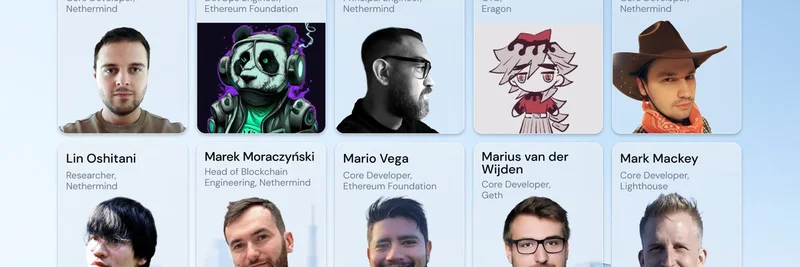
The lineup reads like a who's who of Ethereum development. Moderated by Ahmad Bitar and Kamil Chodola, the panel includes experts from Nethermind, the Ethereum Foundation, Geth, Erigon, Prysm, and more. Here's a quick rundown of some key speakers:
- Barnabas Busa (DevOps Engineer, Ethereum Foundation): Diving into testing and fork readiness.
- Mario Vega (Core Developer, Ethereum Foundation): Sharing on devnets and client coordination.
- Ben Adams (Principal Engineer, Nethermind): Leading discussions on L1 scaling and user experience.
- Giulio Rebuffo (CTO, Erigon): Covering EIPs for gas accounting and block limits.
- Lukasz Rozmej (Core Developer, Nethermind): Focused on cryptography costs and throughput.
- Marius van der Wijden (Core Developer, Geth): Tackling scaling improvements.
- Terence Tsao (Core Developer, Offchain Labs): Explaining L2 enhancements like blob capacity.
- Potuz (Core Dev, Prysm): On fees and cross-layer economics.
- Alexey Osipov (Core Developer, Nethermind): Impact on rollups and meme-friendly networks.
- And others like Lin Oshitani, Marek Moraczyński, Mark Mackey, Toni Wahrstätter, Ulaş Erdoğan, and Tomasz Stanczak.
These folks are the brains behind Ethereum's infrastructure, so expect deep dives with practical advice.
Agenda Highlights: From Scaling to Real-World Impact
The stream is packed with sessions starting at 8:00 PM UTC:
- Opening & Fusaka Overview: A quick intro to how Fusaka scales Ethereum and cuts gas drama.
- Testing & Fork Readiness: Status updates on devnets and how teams are prepping for a smooth rollout.
- Scaling the L1: Deep into EIPs like 7623, 7823, 7838, 7934, and 7935—these tweak gas limits and costs to boost network capacity.
- Scaling the L2: EIPs 7584, 7892, and 7918 aim to amp up blob handling, making rollups (where many meme tokens live) more efficient and affordable.
- End User Experience and Developer Impact: EIPs 7917, 7939, and 7951 for better confirmations, simpler contracts, and wallet interactions—huge for meme token devs building user-friendly dApps.
- Live Fusaka Fork: Watch the activation in action and learn what node operators should monitor.
- Ethereum After Fusaka: A recap on bigger L1 room, cheaper L2s, and seamless experiences.
- Closing & Call to Action: Takeaways and how to get involved in testing.
If you're developing a meme token or running a community on Ethereum, pay attention to the L2 scaling part—lower fees could supercharge adoption.
Why This Matters for Meme Tokens
Meme tokens rely on community buzz and low barriers to entry. With Fusaka, Ethereum's ecosystem becomes more scalable, meaning your next dog-themed coin could launch without breaking the bank on gas. L2 networks, already popular for memes due to speed and cost, get even better with improved blob economics and fee structures. This upgrade could spark a new wave of innovation, from easier NFT integrations to faster trading bots.
Nethermind's event is a great chance to stay ahead. If you're serious about blockchain, tuning in could give you an edge in understanding how these changes ripple through to meme markets.
For more on Ethereum's EIPs, check out Nethermind's in-depth article. And if you miss the live session, replays should be available on their YouTube channel.
Stay tuned to Meme Insider for more updates on how tech upgrades like Fusaka are shaping the meme token landscape.