Meme Insider
In the fast-paced world of crypto, where meme tokens thrive on community buzz and quick trades, privacy is becoming a hot-button issue. A recent tweet from @c2yptic, a prominent figure in the Solana ecosystem, has ignited discussions about the EU's chat control proposal and its eerie similarities to past authoritarian surveillance tactics.
The tweet, posted on November 26, 2025, draws a stark comparison between the EU's push for monitoring private messages and the Nazi regime's mail inspections. It's not just hyperbole—critics argue that this could erode digital freedoms in ways that echo history.
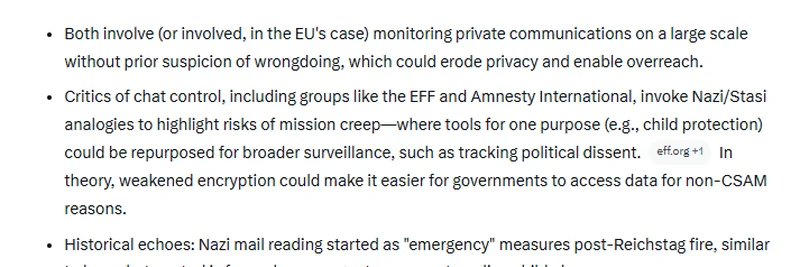
As shown in the infographic shared in the tweet, both involve large-scale monitoring without prior suspicion, potentially enabling overreach. Groups like the Electronic Frontier Foundation (EFF) and Amnesty International have invoked Nazi and Stasi analogies to warn about mission creep—where tools meant for child protection get repurposed for broader surveillance, like tracking political dissent.
What's the EU Chat Control All About?
For those new to the term, "chat control" refers to the EU's proposed regulation aimed at combating child sexual abuse material (CSAM) online. On November 26, 2025, the EU Council agreed on a negotiating mandate for this law, which includes provisions for voluntary scanning of private communications by tech companies.
While the goal—protecting kids—is noble, the method raises red flags. It could involve client-side scanning on devices, bypassing end-to-end encryption on apps like WhatsApp or Signal. Experts warn this weakens encryption overall, making it easier for governments (or hackers) to access data for reasons beyond CSAM. As EFF notes, even "voluntary" measures might become de facto mandatory due to pressure.
This isn't the first rodeo; the proposal has been debated since 2022, with versions fluctuating between mandatory and voluntary scanning. The latest compromise, as reported by TechRadar, keeps voluntary chat scanning but adds mandatory age verification, which could still invade privacy.
Crypto's Stake in the Privacy Battle
Why does this matter for meme token enthusiasts? In the blockchain world, especially on chains like Solana where memes like $PUMP or $BONK explode overnight, privacy tools are key to shielding transactions from prying eyes. Public ledgers are great for transparency but lousy for personal anonymity—think whale watching or doxxing risks.
@c2yptic's tweet pledges support for @0xMert_'s initiative to champion privacy across the board. Mert, known in the community as a builder in zero-knowledge (ZK) proofs and privacy protocols on Solana (like those from Light Protocol), has been vocal about building tools that preserve freedom. Replies to the tweet, including from @poseidoncash—a Solana-based privacy protocol using Groth16 proofs and Poseidon hashing—echo this sentiment: "We stand with anyone building the tools to keep the digital world free."
For meme token traders, privacy means safer participation in DAOs, anonymous voting, or shielding wallets from targeted scams. Projects like Poseidon Cash enable shielded transactions, ensuring your meme buys don't broadcast your entire portfolio. As governments ramp up surveillance, these tools become lifelines for decentralization.
Historical Echoes and Future Implications
The tweet's infographic points out how Nazi mail reading started as an "emergency" post-Reichstag fire, much like chat control is framed around urgent child abuse responses. History shows such measures rarely stay limited. In crypto, weakened encryption could expose DeFi users to more KYC demands or asset freezes, stifling the permissionless ethos that fuels meme culture.
Experts like Carmela Troncoso from the Max Planck Institute highlight that voluntary scanning still poses risks without truly enhancing protection. Patrick Breyer, a privacy advocate, warns in his analysis that age verification systems could discriminate and invade privacy further.
What Can the Crypto Community Do?
As @c2yptic puts it, "freedom is at stake and we cant sit idle." Supporting privacy-focused projects is a start—whether through using ZK tools, contributing to DAOs, or spreading awareness. In the meme token space, where virality drives value, threads like this one remind us that tech isn't just about gains; it's about preserving liberties.
If you're diving into Solana memes, consider privacy layers to stay secure. The fight against overreach like chat control isn't just European—it's global, impacting how we build and trade in web3.
Stay informed, stay private, and keep memeing responsibly.