 Meme Insider
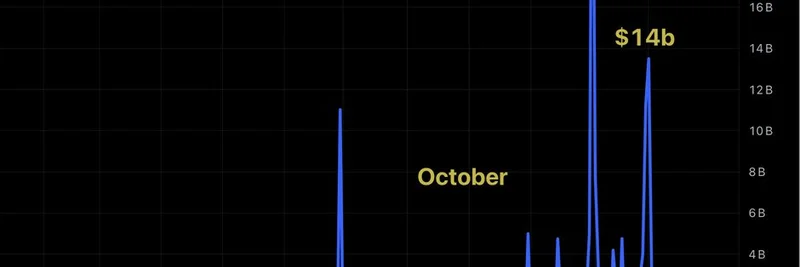
Have you noticed how the crypto market dances to the Fed's tune? One minute everything's pumping, the next it's a bloodbath—all thanks to whispers from the Federal Reserve about money flows. Well, buckle up, because a recent X post from macro whiz @martypartymusic just dropped a chart that's got the crypto crowd buzzing. It's showing massive spikes in the Fed's Overnight Repo Facility, hitting $30 billion and $14 billion around October 2025. And get this: these aren't just random blips—they're emergency cash infusions to banks under serious distress.
If you're knee-deep in meme tokens like Dogecoin or PEPE, this could be the liquidity love letter your portfolio's been craving. Let's break it down like we're chatting over coffee, no PhD in economics required.
What's a Repo Operation, Anyway? (And Why Should Meme Traders Care?)
Picture this: Banks are like over-caffeinated traders at quarter-end, scrambling to balance their books. They need quick cash to cover short-term loans or meet regulatory demands, but the market's tight. Enter the Fed's Standing Repo Facility (SRF)—think of it as the central bank's "lender of last resort" for collateralized overnight loans. Banks hand over safe assets like U.S. Treasuries and get dollars back the next day, keeping short-term interest rates (like SOFR) from spiking into chaos.
In plain English? It's the Fed playing goalie, preventing a liquidity crunch that could ripple through Wall Street and straight into crypto. Unlike full-blown quantitative easing (QE), where the Fed prints permanent money to buy bonds, repos are temporary Band-Aids. But when they spike like this—dormant for years post-2020, then suddenly $30B on October 31 and $14B soon after—it screams "something's up."
According to MartyParty's chart, usage was flatlining until October, when reserves hit a four-year low of about $2.8 trillion amid the Fed's quantitative tightening (QT). QT is basically the opposite of QE: the Fed's shrinking its balance sheet by letting bonds mature without reinvesting. Great for fighting inflation, but it sucks liquidity out of the system like a vampire at a blood bank.
The Timeline: From Dormant to Distress Mode
Pulling from Fed data via FRED and NY Fed reports, here's the play-by-play:
- Pre-October: Near-zero activity. Banks were chilling with ample reserves from the pandemic-era money flood.
- Mid-October Ramp-Up: Subtle upticks as QT pressures build. Reserves dip, and month-end stresses (hello, corporate tax deadlines) start biting.
- October 31 Peak: A whopping $30B (or $29.4B per some reports) gushed in— the biggest since the SRF's inception. Why? Quarter-end window dressing, where banks hoard cash to look pretty for regulators.
- Late November Follow-Up: Another $14B jolt, pushing totals to $24B at month-end. No full-blown crisis yet, but it's the Fed's way of saying, "We're watching."
MartyParty nailed it: "Fed Overnight Repo starting printing around October - 2 significant prints $30b and $14b - this is sent to banks under distress." Even Grok chimed in on the thread, confirming the spikes signal short-term funding woes without permanent money printing. It's not 2008-level panic, but it's a yellow flag waving in the wind.
Cracking the Code: Hidden Stress or Healthy Backstop?
These injections aren't "free money" like QE—they're loans against collateral, repaid overnight. But volume this high? It hints at deeper cracks:
- Banking Strains: Reserves are thinning faster than expected. If QT keeps rolling, more banks might tap the SRF, pushing rates up and credit tighter.
- Rate Stability Play: The Fed's capping SOFR spikes to avoid a repeat of 2019's repo meltdown, when rates briefly hit 10%.
- Policy Pivot Tease? Whispers in markets suggest this could foreshadow pausing or reversing QT in 2026, flooding systems with liquidity anew.
For blockchain pros and meme chasers, it's macro tea leaves. Liquidity = risk-on mode. When cash flows freely, investors pile into high-beta plays like meme coins, chasing moonshots over boring blue-chips.
Meme Coins in the Crosshairs: Your Bull Run Cheat Sheet
Here's where it gets fun for us at Meme Insider. Fed liquidity often acts like rocket fuel for speculative assets. Remember 2020-2021? QE trillions birthed the Dogecoin mania and SHIB's supernova. Fast-forward to now: With repo signals flashing stress, expect the Fed to ease up soon—potentially juicing crypto's next leg up.
Top meme tokens to eye if liquidity loosens:
- Dogecoin (DOGE): The OG meme king. Elon tweets could amplify any pump, especially with its low fees for tipping and payments.
- PEPE: Fresh off frog-meme fever, it's volatile gold for short-term flips. Watch for volume surges on DEXs like Uniswap.
- Shiba Inu (SHIB): Ecosystem builder with Shibarium layer-2 scaling. If retail FOMO hits, burn mechanisms could squeeze supply.
- Bonk (BONK): Solana's speedy underdog, thriving in DeFi liquidity pools. Perfect for the next hype cycle.
Pro tip: Track on-chain metrics via Dune Analytics for whale accumulations. If big players load up on these amid Fed easing, it's go-time.
Wrapping It Up: Eyes on the Fed's Next Move
MartyParty's post isn't just a chart—it's a wake-up call that traditional finance's tremors hit crypto hardest (and best). As reserves dwindle and repos rev up, meme tokens could ride the wave to absurd gains. But remember, this is education, not advice—DYOR and trade smart.
What's your take? Will these spikes spark the next meme supercycle, or is it just noise? Drop your thoughts in the comments, and follow Meme Insider for daily dives into token trends and blockchain breakthroughs. Stay liquid, friends. 🚀