 Meme Insider
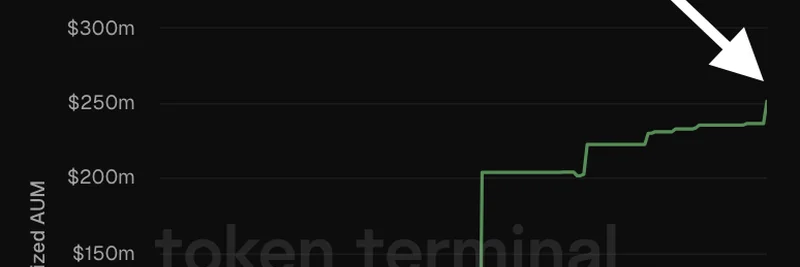
Fidelity, one of the giants in traditional finance with around $6.4 trillion in assets under management, is making waves in the crypto space. Their tokenized money market fund on Ethereum has just crossed the $250 million mark in assets under management (AUM). This milestone was highlighted in a recent tweet from Token Terminal, showing steady growth since its launch.
Understanding Fidelity's FDIT Fund
The fund in question is called FDIT, which stands for Fidelity Digital Interest Token. It's essentially a blockchain-based version of a traditional money market fund. For those new to the term, a money market fund invests in short-term, low-risk debt like U.S. Treasury securities and cash equivalents, aiming to provide stable returns with minimal volatility.
What makes FDIT special is that it's tokenized on the Ethereum blockchain. This means shares of the fund are represented as digital tokens, allowing for easier transfer, settlement, and integration with other crypto protocols. Launched quietly around late 2024 or early 2025, it started gaining traction and was publicly noted around September 2025 when it hit $200 million in AUM. Now, just a couple of months later, it's up to $250 million, reflecting growing confidence from institutional investors.
The fund comes with a low 0.2% management fee and is backed by partnerships like Ondo Finance, which helps anchor the on-chain aspects. It's a prime example of Real World Assets (RWAs) coming to blockchain—taking traditional financial products and putting them on-chain for better efficiency and accessibility.
Why This Matters for Blockchain and Crypto
This development isn't just about Fidelity dipping its toes into crypto; it's a sign of broader institutional adoption. With Ethereum as the platform, it underscores the network's role in handling sophisticated financial instruments. Ethereum's smart contracts enable seamless interactions, which could lead to more liquidity flowing into the ecosystem.
For blockchain practitioners and meme token enthusiasts, this is exciting. Increased institutional money on Ethereum could spill over into DeFi protocols, where many meme tokens thrive. Think about it: more on-chain activity means higher transaction volumes, potentially boosting the visibility and value of community-driven projects. Plus, as TradFi (traditional finance) warms up to crypto, it paves the way for innovative products—maybe even tokenized meme funds in the future?
Community reactions echo this optimism. One reply to the Token Terminal tweet noted the "impressive growth" and confidence in Ethereum for institutional-grade tools. Another simply said, "TradFi waking up. WAGMI for the future," where WAGMI means "We're All Gonna Make It"—a classic crypto rallying cry.
Broader Implications for Meme Tokens and DeFi
At Meme Insider, we focus on meme tokens, but news like this ties directly into the bigger picture. Meme coins often ride the waves of overall market sentiment and liquidity. With giants like Fidelity committing resources to Ethereum-based assets, it could attract more capital to the space, indirectly benefiting volatile but fun assets like memes.
That said, it's worth watching how this evolves. Tokenized funds compete with on-chain natives like BlackRock's BUIDL, which has also seen massive growth. The race is on for who dominates the RWA sector, and Ethereum's scalability improvements (like layer-2 solutions) will be key.
If you're diving into crypto, milestones like this show that blockchain isn't just for speculation—it's becoming a backbone for real finance. Stay tuned for more updates on how these trends impact meme tokens and the wider ecosystem.