Meme Insider
In the fast-paced world of Crypto Twitter, or CT as insiders call it, things move at lightning speed. But according to a recent thread from @basedkarbon, the community might be losing its edge. The post, which has garnered significant attention with over 70 likes and thousands of views, laments the lack of a quick response to X's (formerly Twitter) new geodox feature.
Geodox, short for geographic doxxing, is a rollout on X that displays the country associated with a user's account—based on registration details, app store country, or connection location. This tool aims to add transparency but raises privacy eyebrows, especially in privacy-focused spaces like crypto.
@basedkarbon quoted his own earlier post asking if anyone had compiled a list of "crypto larps who are third worlders" now that geodox is live. LARP here means live-action role-playing, but in crypto slang, it refers to people pretending to be something they're not—perhaps influencers faking their backgrounds for clout.
The main thread expresses disappointment: "I'm so disappointed in ct. A couple years ago someone would've had a Google Sheet well organized with all the KOLs & their country of origin in <24 hrs of this going live. C'mon ct asleep at the wheel. We need to know! Waiting for some data junky to step up & get it done."
KOL stands for Key Opinion Leader, those influential voices in crypto who shape trends, promote tokens, and drive market sentiment. In the meme token space, where hype can make or break a project, knowing who's behind the buzz matters. Many meme coins, like those inspired by viral trends or animals, often launch from diverse global teams, and geodox could expose discrepancies in portrayed vs. actual origins.
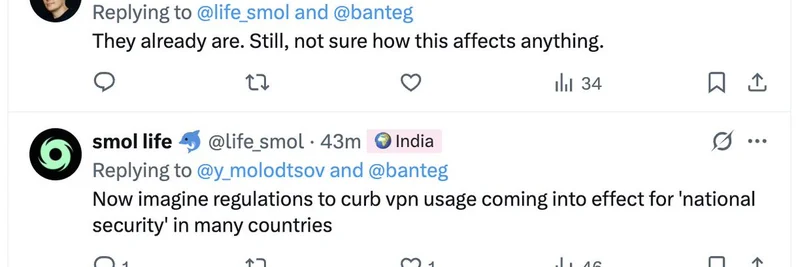
One reply from @jackals__ highlighted a related post by @banteg, who created a browser extension demonstrating how easy it is to implement region blocking or similar features.
This extension, built in just half an hour, underscores how geodox could evolve into more divisive tools, potentially fragmenting the "global town square" that X promotes.
Other responses echoed the sentiment. @ChickunSchnitty joked that the data enthusiasts might themselves hail from third-world countries, while @0xWorkhorse co-signed the expectation for such a list to appear quickly. @unstoppablebyhs challenged the poster to make the list themselves, emphasizing self-reliance.
As meme token enthusiasts, this development is particularly intriguing. Meme coins thrive on community and narrative, often led by anonymous or pseudonymous figures. If geodox reveals that many top promoters are from emerging markets, it could either democratize the space—showing crypto's global reach—or fuel biases and scams accusations.
For blockchain practitioners, this serves as a reminder to verify sources. Tools like geodox might help spot inauthentic narratives, but they also risk infringing on privacy in a sector built on decentralization.
Check out the full thread here and stay tuned to Meme Insider for more updates on how tech shifts impact meme tokens. If you're a data junkie, maybe it's time to step up and build that sheet—CT is waiting!