 Meme Insider
In the fast-paced world of crypto trading, where market crashes can wipe out billions in value overnight, recovery metrics tell a fascinating story. A recent tweet from Hasu, a prominent figure in the blockchain space known for his roles at Flashbots and Lido, sheds light on how to interpret these numbers beyond face value. Quoting a post from @crp0x, Hasu challenges the common reliance on Total Value Locked (TVL) as a benchmark for exchange health.
For those new to the terms, TVL refers to the total amount of assets deposited into a protocol or exchange, often used as a gauge of its popularity and liquidity. Open Interest (OI), on the other hand, measures the total value of outstanding derivative contracts, like perpetual futures, that haven't been settled yet. It's a key indicator of active trading engagement.
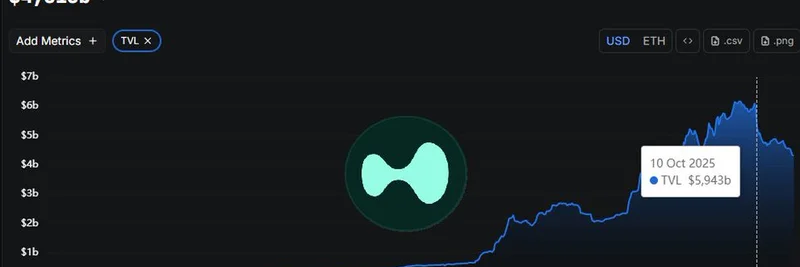
The discussion stems from the October 10 market crash, which hit decentralized exchanges hard. @crp0x shared a chart showing TVL changes post-crash:
According to the data:
- Lighter recovered fully, with a +1.61% change in TVL.
- Hyperliquid saw a significant drop of -27.43%.
- Aster experienced the steepest decline at -45.63%.
Hasu's take? TVL isn't the best metric for comparing exchanges. Instead, he argues that platforms losing more OI likely attract more retail users—the everyday traders who fuel the ecosystem's growth and vitality. "The exchanges who lost more OI tend to have more retail users, which are ultimately all that matters," he tweeted.
This perspective flips the narrative. While a stable TVL might look impressive on paper, it's the retail crowd—degens chasing memes, speculating on trends, and driving volume—that sustains platforms long-term. Retail users bring unpredictability and energy, pushing exchanges to innovate in user experience, fees, and features. For meme token enthusiasts, this is particularly relevant, as platforms like Hyperliquid have become hotspots for trading volatile meme perps.
Replies to Hasu's thread echo this sentiment. One user noted that more OI fluctuations signal a trader-heavy platform, while another pointed out Lighter's aggressive auto-deleveraging (ADL) might have driven users away temporarily, but perks like low fees and airdrop farming could boost stickiness post-token generation event (TGE).
In the meme token space, where hype cycles dominate, understanding these dynamics helps practitioners choose the right venues for trading. Exchanges prioritizing retail flows might weather storms better by fostering loyal communities, even if it means short-term OI volatility.
As the crypto landscape evolves, insights like Hasu's remind us to look beyond vanity metrics. For blockchain builders and traders alike, focusing on retail engagement could be the key to building resilient, user-centric platforms.