 Meme Insider
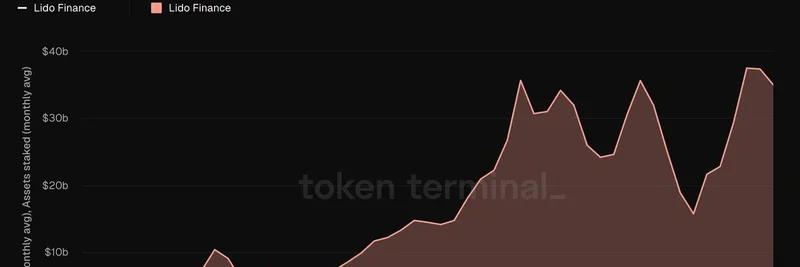
In the fast-paced world of decentralized finance (DeFi), keeping tabs on key players like Lido Finance can offer valuable insights—not just for traditional crypto investors, but also for those diving into the wild world of meme tokens. A recent thread from Token Terminal highlights some eye-opening metrics for Lido (LDO), showing how the protocol has grown tremendously since May 2021, even as its token valuation has taken a hit. Let's break it down in simple terms and see how this ties into the bigger picture, including opportunities for meme token enthusiasts.
Understanding Lido's Core Metrics
Lido Finance is a leading liquid staking protocol on Ethereum, allowing users to stake their ETH and receive stETH in return—a liquid token that can be traded or used in DeFi while still earning staking rewards. This setup solves a big problem in traditional staking: locked-up assets. According to Token Terminal's data, Lido's staked assets have skyrocketed from $1.2 billion in May 2021 to a whopping $35 billion today. That's a massive increase, reflecting growing trust in the protocol and the broader adoption of Ethereum staking.
Meanwhile, Lido's fully diluted valuation (FDV)—which estimates the total value if all tokens were in circulation—has dropped from $2.1 billion to $1 billion over the same period. FDV is like a snapshot of the project's perceived worth, and this decline suggests the market might be undervaluing Lido relative to its operational growth.
The chart above, shared in the thread, visually captures this divergence: the brown line for staked assets climbs steadily with peaks and valleys, while the white line for FDV trends downward after initial highs. It's a classic case of fundamentals improving while market sentiment lags—something savvy investors watch closely.
Why the Valuation Dip Despite Growth?
Several factors could explain this. The crypto market has been volatile, with broader bear phases impacting token prices. But Lido hasn't been standing still. The protocol has rolled out initiatives like Community Staking Module (CSM), Distributed Validator Technology (DVT), and dual governance to decentralize operations and reduce risks. These upgrades aim to make Lido more robust and appealing to node operators, potentially setting the stage for future value accrual.
A key highlight from the thread is Lido's buyback program. Using a portion of protocol revenue to repurchase LDO tokens, the DAO (Decentralized Autonomous Organization) creates a direct link between staking growth and token demand. In plain English, as more ETH gets staked through Lido, more revenue flows in, some of which buys back LDO—potentially supporting its price over time.
This mirrors trends in other DeFi blue chips mentioned in the thread, like Uniswap (UNI) and Aave (AAVE), where operational metrics have improved while valuations dipped. For instance, Uniswap's trading volume tripled to $116.6 billion monthly, yet UNI's value fell from $21.7 billion to $6.8 billion. These patterns suggest a "new era for DeFi tokens," as Token Terminal puts it, where undervalued assets could rebound with market recovery.
Ties to the Meme Token Ecosystem
You might be wondering: what does this have to do with meme tokens? At Meme Insider, we focus on how broader blockchain developments influence the meme space. Liquid staking protocols like Lido free up capital—users can stake ETH for yields while using stETH as collateral in DeFi apps. This extra liquidity often flows into high-risk, high-reward areas like meme tokens.
For example, stETH can be leveraged on platforms like Aave to borrow assets for trading memes on Uniswap or other DEXs. As Lido grows, it bolsters Ethereum's overall liquidity, making it easier for meme projects to launch, trade, and gain traction. If LDO and similar tokens are indeed undervalued, a rebound could signal a DeFi bull run, spilling over into memes as investors rotate profits.
Plus, with Ethereum's ongoing upgrades (like potential restaking integrations), Lido's infrastructure could support meme-friendly innovations, such as tokenized meme communities or yield-bearing meme vaults.
Broader Updates from Token Terminal's Snapshot
The thread isn't just about Lido—it's part of Token Terminal's weekly "Snapshot," covering new project listings like Acala (a DeFi hub on Polkadot), Hyperbridge (for cross-chain interoperability), and Hydration (a liquidity layer). They also added 595 tokenized stocks from platforms like Robinhood and Ondo Finance, expanding real-world asset (RWA) coverage.
Expanded metrics include Aave and Pendle on Plasma chain, XPL token holders, and fees on new layers like Unichain. These updates make Token Terminal a go-to for data-driven insights, especially useful for tracking how DeFi evolves alongside meme trends.
A notable product update: integration with Flipside AI, bringing Token Terminal's onchain data into an AI-powered research platform. This could help meme token researchers analyze trends faster—imagine querying AI for "top meme tokens by staking yield integration."
Final Thoughts
Lido's story is one of resilience and innovation in DeFi. Despite a lower valuation, its surging staked assets point to strong fundamentals that could pay off big for patient holders. For meme token fans, this underscores how DeFi infrastructure underpins the entire ecosystem, providing the liquidity and tools needed for memes to thrive.
If you're building or trading in blockchain, keep an eye on protocols like Lido—they're the backbone of what's next. Check out the full thread on X for more details, and stay tuned to Meme Insider for how these trends intersect with the meme world.