Meme Insider
If you're diving into decentralized finance (DeFi) on Solana, you've probably heard of liquidity providing, but have you tried the "Stable Curve" strategy? This approach, shared in a recent thread by @solsaintt on X, is a gem for those looking to optimize their positions on Meteora AG's Dynamic Liquidity Market Maker (DLMM). It's especially handy for stable pairs or tokens with somewhat predictable price ranges, helping you rake in fees while keeping impermanent loss (IL)—that pesky value drop from price swings—in check. Let's break it down step by step, based on the insights from the original thread.
What Is the Stable Curve Strategy?
At its core, the Stable Curve is all about concentrating your liquidity where the action is most likely to happen. Unlike more aggressive strategies like bid-ask or spot, which spread liquidity evenly or focus on immediate trades, this one targets a stable range. Think of it as setting up shop in a busy market square rather than scattering stalls everywhere. It's underutilized among degens (high-risk traders in crypto slang), but it shines for pairs that don't swing wildly, like stablecoins or meme tokens in a consolidation phase.
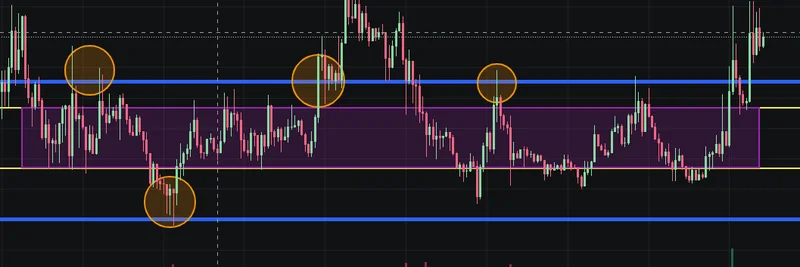
The key? Analyze the chart to spot a "pink box" range where the price hangs out most of the time. Wicks—those quick spikes outside the range—happen, but they're brief. By placing your liquidity densely in that central zone and tapering off outside, you capture maximum fees when the price stays put, and still earn some if it wanders a bit.
As seen in the chart above, the liquidity bars build up in the middle (blue to purple gradient), creating a curve that's heavy in the predictable area. This setup can handle swings from +20% to -25% without completely derailing your position.
Setting Up Your Position
Getting started is straightforward. On Meteora, you can add liquidity on both sides—say, 50% in the token and 50% in SOL (Solana's native token)—for balance. If the token's chilling at the lower or upper end of its range, go one-sided to capitalize on that. The goal is to align your range with the coin's "mood," based on recent behavior.
Here, the liquidity is thickest near the current price, thinning out as it moves away. This way, if the price dips or surges briefly, your position still generates fees without going out of range entirely. Meteora's DLMM allows for this flexible binning, where liquidity is divided into price bins for efficiency.
Potential Rewards and Risks
When it works, the fees can go "brrrr"—crypto speak for printing money fast. A solid analysis could net you impressive PNL (profit and loss) if the coin plays nice.
But hey, crypto's volatile. If things go south, you might face losses, so risk management is key. Start small and scale as you get comfy.
Tips for Beginners and Advanced Users
New to this? Kick off with stable pairs like SOL/USD on a tight range to practice without the meme coin chaos. Tools like @gmgnai can help filter high-volume, range-bound tokens. Or join communities like the @met_lparmy Discord for calls and insights.
For the pros, this strategy's low-key nature means less competition, but always do your own research (DYOR). Meteora AG, built on Solana, offers low fees and fast transactions, making it ideal for these plays. If you're into DeFi, experimenting with DLMM could level up your game.
This strategy might not be flashy, but in a market full of pumps and dumps, steady wins the race. Check out the full thread for more visuals, including a video breakdown, and share your experiences in the comments below. Happy providing!