 Meme Insider
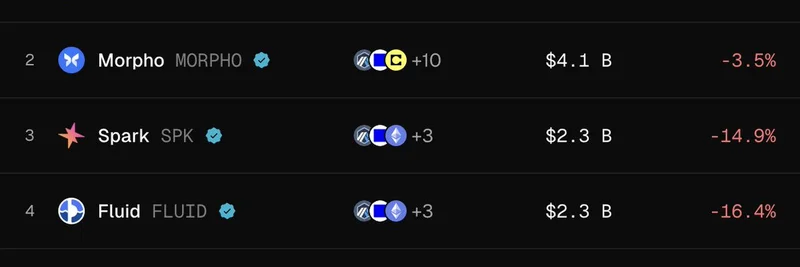
In the fast-paced world of decentralized finance (DeFi), where market swings can make or break protocols, Morpho has just proven its mettle. Paul Frambot, the co-founder and CEO of Morpho Labs, shared an insightful update on X (formerly Twitter) that caught the eye of many in the crypto community. Despite facing two significant volatility shocks last month, Morpho recorded the smallest outflows of loans compared to other major lending platforms. This resilience isn't just a win for Morpho but also shines a light on how solid infrastructure can weather storms in the blockchain space.
What the Data Reveals
Drawing from data provided by Token Terminal, the screenshot in Frambot's post ranks top lending protocols by their active loans. Aave leads the pack with a whopping $21.4 billion but saw a 23.2% drop over the past 30 days. Morpho follows in second place with $4.1 billion in active loans, experiencing only a minor 3.5% decline. Close behind are Spark and Fluid, both at $2.3 billion with steeper drops of 14.9% and 16.4%, respectively. Maple Finance, which Frambot gives a friendly shoutout to, bucks the trend with a positive 16.6% change at $2.2 billion.
This data underscores Morpho's stability. Volatility shocks—think sudden price drops or spikes in crypto assets—often lead to users pulling out their loans to avoid risks like liquidations. Liquidation happens when the value of your collateral falls below a certain threshold, forcing the protocol to sell it off to cover the loan. Morpho's low outflow suggests users trust its system to handle these ups and downs without panic.
Morpho's Unique Position in DeFi
Frambot is quick to note that he usually steers clear of direct comparisons. Why? Because Morpho isn't your typical lending protocol like Aave or Spark, which directly manage assets. Instead, Morpho acts as infrastructure for asset managers. Think of it as the behind-the-scenes tech that powers optimized lending pools, allowing for better rates and efficiency. This setup, often called a meta-optimizer, aggregates liquidity from various sources to give users the best possible yields.
By positioning itself as infrastructure rather than a direct manager, Morpho avoids some of the direct risks that come with asset handling. This could explain its resilience—it's built to support growth without the same exposure to market whims. For blockchain practitioners diving into meme tokens or other volatile assets, understanding tools like Morpho can be a game-changer for managing liquidity and yields safely.
Community Reactions and Broader Implications
The thread sparked some engaging replies. One user pointed out the need for more education on how Morpho powers lending infrastructure, often confused with Aave. Frambot agreed, noting that while the market is catching on, incentives and power dynamics can muddy the waters. Others praised the steady growth, with one calling it "the real flex in DeFi."
For those in the meme token space, this news is particularly relevant. Meme coins thrive on hype and volatility, but sustainable growth often relies on strong DeFi backbones like lending protocols. If you're holding or trading meme tokens, keeping an eye on platforms like Morpho can help you leverage better borrowing and lending options, potentially amplifying your strategies during turbulent times.
As the crypto landscape evolves, stories like Morpho's highlight the importance of resilient infrastructure. Whether you're a seasoned DeFi user or just starting with blockchain tech, this update from Paul Frambot serves as a reminder: in volatility, strength lies in smart design. Stay tuned to Meme Insider for more insights on how these developments impact the meme token ecosystem and beyond.