 Meme Insider
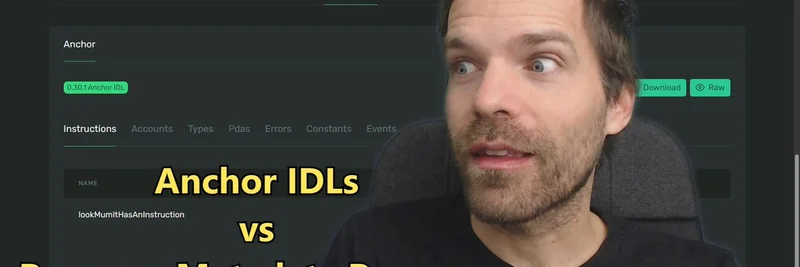
If you're diving into Solana development, especially for creating meme tokens that capture the community's imagination, you've probably heard about the importance of publishing your program's Interface Description Language (IDL) on-chain. A recent thread from Solana dev Solandy (@HeyAndyS) breaks it down simply: yes, you should do it, and there are a couple of solid ways to get it done—either the native Anchor method or using the Program Metadata Program.
This sparked some buzz, including a reply from Jacob Creech, Head of Developer Relations at the Solana Foundation, who noted that Anchor v1 is shifting entirely to the Program Metadata approach. Let's unpack what this means for you, whether you're building the next viral meme coin or just tinkering with Solana smart contracts.
What Is an IDL and Why Publish It On-Chain?
First off, an IDL is basically a blueprint for your Solana program. It describes the instructions, accounts, and data structures your program uses, making it easier for others—like front-end developers, auditors, or even automated tools—to interact with it. Think of it as the API docs for your on-chain code.
Publishing it on-chain means storing this blueprint directly on the Solana blockchain. Why bother? For starters, it boosts transparency—anyone can verify what your program does without trusting off-chain sources. This is huge in the meme token world, where scams are rampant and community trust can make or break a project. Plus, it enables better tooling, like explorers and wallets, to display your program's details accurately. No more relying on GitHub repos that could vanish or get outdated.
The Anchor Native Method: Straightforward but Program-Specific
Anchor, a popular framework for building Solana programs, has its own built-in way to handle IDLs. Here's how it works:
Storage Setup: Anchor creates a dedicated account on-chain using a Program Derived Address (PDA). The seeds are something like "anchor_idl" combined with your program ID. This account is owned by your program itself, which means updates require program logic.
How It Stores Data: The IDL gets compressed (using gzip or deflate) and tucked away as raw bytes after a discriminator and authority key. This keeps things efficient in terms of storage costs.
Updating Made Easy: With Anchor's CLI, you can use commands like
anchor idl upgradeto push changes after tweaking your program. It's all handled within your program's code, which is convenient if you're already deep in Anchor.
This method is great for simplicity, but it does add extra code to every Anchor program you build. If you're launching a meme token with custom logic, this ensures your IDL is always tied directly to the program, reducing the risk of mismatches.
The Program Metadata Program: Flexible and Future-Proof
Enter the Program Metadata Program—a more generalized tool that's not tied to Anchor. It's designed to store not just IDLs but other metadata like security.txt files for any Solana program.
PDA Magic: Accounts are derived using
findProgramAddresswith seeds like your program ID and a padded string (e.g., "IDL" followed by zeros up to 16 bytes).Data Handling: You can store data directly or link to a URL, with options for encoding (UTF-8, Base58, Base64) and compression (gzip, snappy, or none). There's a header that includes details like the program ID, authority, and format (JSON, YAML, TOML).
CLI Tools: Use something like
npx @metaplex-foundation program-metadatato upload your IDL or security info. Commands likewrite metadatalet you specify the program ID, seed, and file path.
The big win here? It's modular and reusable across programs, without bloating your code. It supports canonical (official) and non-canonical (third-party) metadata, making it versatile for community contributions. For meme token devs, this means easier audits and vulnerability reporting—key for maintaining hype without the rug-pull fears.
The Shift in Anchor v1: A Unified Future
As mentioned in the thread, Anchor v1 is ditching its native method in favor of the Program Metadata Program. This transition promises better interoperability and less redundant code. Solandy's excitement in the reply—"Yes! that's good news :D"—echoes what many devs feel: a streamlined ecosystem is on the horizon.
Check out Solandy's in-depth video tutorial for a hands-on walkthrough: How to Put IDLs On-Chain. It's packed with code examples and explorer demos that make these concepts click.
Why This Matters for Meme Token Creators
In the fast-paced world of meme tokens on Solana, where pumps and dumps happen in hours, having your IDL on-chain isn't just a nice-to-have—it's a trust signal. It helps integrators like DEXs and wallets support your token seamlessly, potentially boosting liquidity and adoption. Plus, with tools like the Program Metadata Program, you can add security.txt to invite ethical hackers to spot issues before they become exploits.
Whether you're using Anchor today or eyeing the v1 upgrade, start publishing those IDLs. It's a small step that can protect your project and empower your community. For more Solana dev tips tailored to meme ecosystems, stick around Meme Insider—we've got your back on the latest blockchain buzz.