Meme Insider
In the fast-paced world of cryptocurrency, regulatory clarity is like gold dust. Recently, Rebecca Rettig, a prominent crypto lawyer and legal advisor at Jito Labs, shared a detailed thread on X (formerly Twitter) explaining SEC no-action letters. This came in response to a question from Mike Dudas about the benefits of seeking such letters for projects before their token generation event (TGE). Let's break it down in simple terms and see how it relates to the meme token ecosystem.
What Triggered the Discussion?
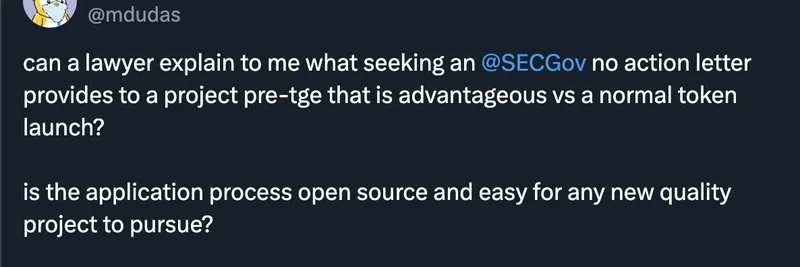
It all started with Mike Dudas's tweet, where he asked for a lawyer's explanation on what an SEC no-action letter offers to a pre-TGE project compared to a standard token launch. He also wondered if the process is open and accessible for new, quality projects. Rettig's thread directly addresses this, highlighting the SEC's recent issuance of a no-action letter to Fuse Energy—the second in two months.
Fuse Energy, a Solana-based project focused on building energy superabundance through green energy rewards, received this letter for their proposed token airdrop and TGE. Backed by investors like Multicoin Capital, Lowercarbon Capital, and Accel, Fuse aims to reward users for sustainable energy practices. You can read more in The Block's coverage.
Breaking Down No-Action Letters
A no-action letter (NAL) is essentially a written assurance from the SEC staff that they won't recommend enforcement action against a company for a specific planned activity—in this case, issuing a token via TGE or airdrop. Think of it as a "green light" based on the facts presented, but it's not a full legal exemption or a binding rule.
Why do teams chase these? As Rettig puts it, it's all about "regulatory clarity." In the murky waters of U.S. securities laws, a NAL offers some protection against immediate SEC crackdowns, making it easier to launch without the constant fear of violations. For blockchain practitioners, this means more confidence in distributing tokens to users.
However, there's a catch. These letters are narrow—they apply only to the exact facts submitted. Change the project's details, like administration or operations, and the protection might vanish. Plus, they're just staff opinions, not ironclad law. New SEC leadership could shift policies, rendering old NALs obsolete.
The Application Process: Open to All?
Good news: Anyone can request a no-action letter from the SEC. With Commissioner Hester Peirce leading the Crypto Task Force, there's a push for clearer paths in token launches, especially since comprehensive crypto legislation is still pending.
That said, it's not a walk in the park. Rettig advises consulting a seasoned lawyer familiar with the SEC. The agency isn't handing these out freely; they seem reserved for specific, narrow projects—like Fuse's utility-focused green energy token, not broad layer-1 blockchains or highly speculative assets.
The process involves submitting a detailed request outlining your project's facts. For Fuse, their incoming letter is available here, and the SEC's response here. No guarantees, and you might need to tweak your plans to fit the SEC's view.
Implications for Meme Tokens
At Meme Insider, we're all about meme tokens—the fun, community-driven coins that often go viral on platforms like Solana. While Fuse Energy isn't a meme token (it's more about real-world utility in green energy), this development is intriguing for the meme space.
Meme tokens typically thrive on hype and speculation, which might not align with the "narrow facts" the SEC favors for NALs. However, if a meme project incorporates genuine utility—say, tying rewards to community actions or charitable causes—it could potentially seek similar clarity. This could legitimize launches, attract more institutional interest, and reduce regulatory risks.
Imagine a meme token that rewards holders for eco-friendly behaviors, echoing Fuse's model. It might bridge the gap between fun and function, making it eligible for an NAL. Of course, most pure memes might still opt for "normal" launches to avoid scrutiny, but for ambitious projects, this is a tool worth considering.
Final Thoughts
Rettig's thread is a breath of fresh air in crypto regulation discussions, praising the SEC's efforts amid a shifting landscape. Congrats to Fuse Energy on this milestone—it's a step toward more predictable token launches.
If you're building a meme token or any blockchain project, weigh the pros and cons of seeking an NAL. It could provide that extra layer of security in an uncertain world. For more on crypto regs and meme trends, stick with Meme Insider.
Check out the full thread here.