 Meme Insider
Ever stared at that shiny silver ring on your finger and wondered where it all comes from? It's not as straightforward as you might think. A recent X post by metals expert Gary Bohm dives into the quirky economics of silver production, and it's a real eye-opener for anyone tracking commodities—or even dipping toes into blockchain assets like silver-backed tokens.
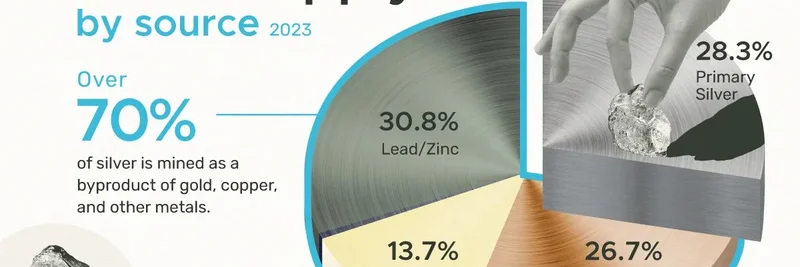
The chart above paints a clear picture: In 2023, only about 28.3% of global silver came straight from dedicated silver mines. The lion's share—over 70%—is scooped up as a byproduct while digging for other metals. Lead and zinc mining alone chipped in 30.8%, copper added 26.7%, gold contributed 13.7%, and a smattering of other sources made up the rest (0.5%).
Sounds technical? Let's break it down simply: Imagine silver as the unexpected bonus in a treasure hunt. Miners aren't primarily after it; they're chasing the "main prizes" like copper for wiring your gadgets or gold for jewelry and tech. Silver just tags along in the ore. That's why Bohm calls it a "devastating implication" for supply. When silver prices spike—like they have recently, hovering around $30 per ounce amid industrial demand from solar panels and electronics—miners can't just flip a switch and dig more.
The Byproduct Trap: No Quick Fixes for Silver Shortages
Here's the rub: New mines don't pop up overnight because silver's hot. Building a mine takes years, billions in investment, and a rock-solid business case based on the primary metal's price. If lead prices are meh, no one's cracking open a lead-zinc operation just for the silver side hustle. As Bohm puts it, "Silver production is hostage to the economics of the primary metals."
This setup creates a supply crunch that's hard to escape. Demand? It's booming. Silver's not just bling anymore—it's crucial for green tech, EVs, and even AI hardware. But supply? Stuck in neutral unless copper or gold miners get excited elsewhere.
Think about it in crypto terms: It's like how Bitcoin's hash rate doesn't surge just because ETH prices moon. The infrastructure's tied to broader incentives. For blockchain folks eyeing meme tokens or precious metal plays, this means silver could be a stealthy hedge—volatile, yes, but with fundamentals screaming "upside" if industrial use keeps climbing.
What Could Break the Chains?
Bohm's thread sparked some lively replies, too. One user quipped it's like silver being "the sidekick in the metal world," while another pondered if prices hitting $100/oz might finally tempt miners to prioritize the bonus. (Spoiler: Even then, it might not be enough—Grok chimed in estimating it'd need to top $100 to sway decisions, but primary metals still rule.)
Others highlighted "peak metals" looming, with replies sharing charts on demographics dragging down commodity demand long-term. Yet, for silver, the devaluation play might win out—monetary hedges like precious metals often outpace general commodities in inflationary squeezes.
Why This Matters for Meme Token Hunters and Blockchain Builders
At Meme Insider, we're all about spotting the memes that morph into movements, but underlying assets like silver add real-world grit. With silver's supply so inelastic, any meme coin or token tying into physical metals (think tokenized silver on Ethereum or Solana) could ride this wave. It's a reminder: In crypto and commodities alike, true scarcity drives value.
Keep an eye on silver ETFs or even niche projects blending memes with metal-backed stability. As Bohm's post shows, the shiny stuff's story is far from over—it's just getting more entangled with the global grind.
What do you think—will silver break free from its byproduct bonds? Drop your takes in the comments.