 Meme Insider
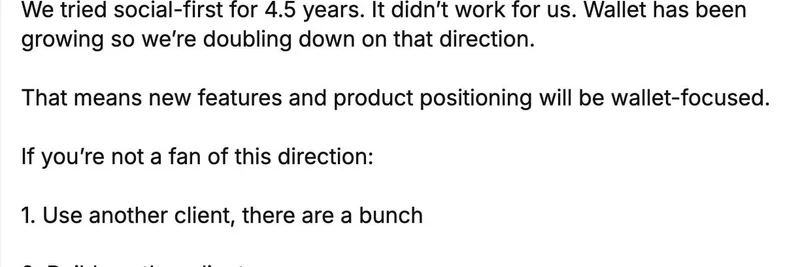
The crypto world loves a good hype cycle, doesn't it? One minute, everyone's buzzing about the next big thing—SocialFi platforms promising decentralized Twitter with token tips, or GameFi worlds where you play-to-earn your way to riches. But just like that, the dream deflates. Recent news from Farcaster, a leading decentralized social network, has everyone talking: after four to five years of chasing a "social-first" strategy, they're ditching it for a wallet-centric approach. It's the final nail in the coffin for SocialFi's grand ambitions, and it echoes the broader unraveling of "Fi" everything from the last bull run.
This pivot isn't happening in a vacuum. As CM, a DeFi veteran, put it succinctly: the SocialFi, GameFi, and even NFTFi narratives that had us believing anything could be tokenized and incentivized have collapsed under their own weight. Today, crypto feels like it's hit the rewind button, zooming back to the wild ICO days of 2017—where the focus is squarely on trading, launching, and pumping tokens rather than building sticky, user-driven experiences.
At the heart of this postmortem is a simple yet profound insight, shared by Neso, a vocal Bitcoin and PEPE advocate: "Social and Game need intrinsic drive and long-term retention, but token incentives are short-term behavior engines that only provide external benefit stimulation. This is the fundamental reason SocialFi and GameFi projects will ultimately be disproven."
Let's break that down in plain English, because if you're knee-deep in meme tokens or just dipping your toes into blockchain, this matters. Intrinsic motivation is that internal spark—the joy of connecting with friends on a social app or the thrill of outsmarting opponents in a game. It's what keeps you coming back to Instagram or Fortnite without a paycheck dangling in front of you. Long-term retention, meanwhile, is the holy grail: users who stick around, building communities and generating real value over time.
Token incentives? They're the crypto equivalent of a sugar rush. Airdrops, staking rewards, or play-to-earn mechanics dangle quick bucks (or sats) to lure you in. Sure, they spike engagement—think Dogecoin-fueled tipping sprees or Axie Infinity's early boom. But once the rewards dry up or the market dips, poof—users ghost. It's external motivation at its finest: "I'll post because I get paid," not "I'll post because it's fun." And in a space as volatile as crypto, those short-term engines sputter fast.
Farcaster's shift underscores this perfectly. Launched with visions of a token-gated, creator-economy paradise, the platform poured resources into social features. Yet, as adoption stalled and the bear market bit, they realized the model wasn't scaling. Now, they're leaning into wallets—tools for seamless DeFi interactions and asset management. It's a pragmatic move, aligning with crypto's current vibe: utility over utopia.
This isn't just a SocialFi story; it's a cautionary tale for all blockchain builders. Remember the NFT boom? Bored Apes sold for millions, but when the flips slowed, so did the "community." GameFi's poster child, Axie, peaked at 2.7 million daily users in 2021—then cratered to under 50,000 as rewards became unsustainable. Even meme tokens, our bread and butter here at Meme Insider, thrive on viral hype more than enduring mechanics. PEPE might moon on a tweet, but it won't build a social graph.
So, what's the fix? If you're a practitioner tinkering with the next meme coin or DeFi protocol, prioritize the "why" over the "how much." Blend incentives with genuine value—think hybrid models where tokens unlock social features after you've earned your spot through engagement. Or, take a page from Bitcoin's book: simple, sound money with organic adoption.
As we barrel toward what feels like ICO 2.0, this reset could be healthy. It weeds out the fluff, forcing innovation toward sustainable tech. SocialFi and GameFi aren't dead—they're evolving. But without addressing that intrinsic spark, they'll stay in the "nice try" bin of crypto history.
What do you think—can tokens ever truly gamify human connection, or are we better off keeping it old-school? Drop your takes in the comments, and check out our knowledge base for more on tokenomics and trends.