 Meme Insider
In the fast-paced world of blockchain, especially on Solana where meme tokens thrive, understanding how to build efficient applications is crucial. Recently, Brian Long, a seasoned entrepreneur and blockchain expert, spotlighted a detailed thread by Noah, a protocol engineer at Helium, on Solana application architectures. This thread breaks down everything from basic setups to more complex ones, offering valuable lessons for anyone diving into meme token projects or other dApps.
Brian's take? He praises Noah as one of Solana's most battle-tested devs who's "chewed a lot of glass" – meaning he's faced and overcome tons of challenges. Brian adds that sticking solely to Solana's RPC API (Remote Procedure Call, basically the way apps talk to the blockchain) results in basic apps. For more advanced features, like richer business logic in meme trading platforms, you need the strategies Noah outlines. He also notes plenty of jobs for full-stack devs in Web3.
Let's dive into Noah's thread, which starts with the simplest architecture and builds up. This is gold for meme token creators, as Solana's speed makes it a hotspot for viral memes, but poor design can lead to slow UIs or high costs.
The Basic Setup: Direct-to-RPC
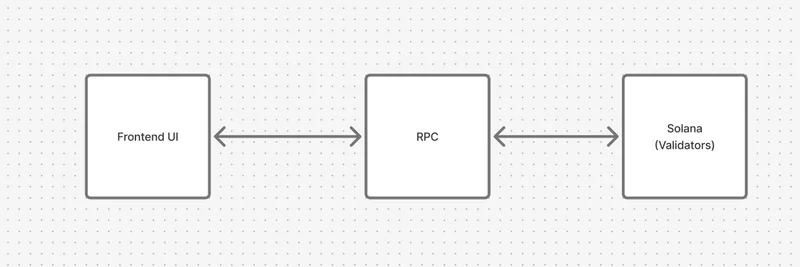
Noah kicks off with what he calls "easy mode" – a simple React frontend connected directly to a Solana RPC. No backend server needed; the RPC acts as your server. Early on, this involves calls like getAccountInfo for fetching data and building transactions manually.
As your app grows – say, for a meme token dashboard tracking prices and holders – you add caching, batching with getMultipleAccounts, and real-time updates via websockets and polling.
Pros: Super fast to prototype, minimal devops, cheap to run (host on Vercel). Perfect for bootstrapping a meme token launcher.
But issues arise:
Complex Queries: Solana's RPC treats the chain like a quirky NoSQL database. Point queries are fine, but getProgramAccounts (gPA) for broader searches? It's clunky, slow, and useless for variable-length data. Meme tokens often need quick holder lists or trade histories – this setup struggles.
Transaction Portability: Logic for building txs lives in the frontend or libraries. Updating it means republishing packages and UIs. For meme bots or integrations, this lacks flexibility.
TX Submission: UIs aren't great at retries; users navigate away, and txs fail. Debugging is tough.
RPC Theft: Exposed RPC URLs mean others can leech your credits, spiking costs.
Hybrid Approach: Adding an API for Tough Queries
To fix query pains, Noah suggests a hybrid: Keep the direct RPC for most things but offload complex queries to a backend API.
Example: In governance for a meme token DAO, filtering proposals by tags like "Economic" isn't gPA-friendly. The API handles it.
This keeps prototyping speedy and solves slow gPAs at scale. But you still deal with tx portability and RPC theft, plus now you need indexers – services that scan the chain and store data in queryable databases.
The Enterprise Stack: Full Backend Control
For pro-level apps, treat Solana as an event bus. The frontend is oblivious to Solana's data model; the server builds txs, sends them for signing, submits them, and uses indexers to update data.
Benefits:
Easy tx portability – APIs return txs/instructions for any client.
Snappy UIs with server-side rendering (SSR), feeling like Web2.
Hidden RPC, no theft.
Great for complex meme ecosystems, like DEXs or NFT-meme hybrids.
Downsides:
Indexer Woes: Miss an event, and your UI glitches (e.g., showing wrong token ownership). Debugging: Is it you or the provider? Providers like Helius or Triton help, but issues persist.
Timing Problems: Indexers lag, leading to txs based on stale data. Fast streams fix this but introduce reorg handling (undoing unconfirmed changes) – a nightmare.
Hacky Fixes: Use RPC for tx building and indexers for UI, but inconsistencies frustrate users.
Costs and Centralization: Heavy infra means high bills and less decentralization. Is your meme token truly Web3 if it relies on centralized servers? Noah's pragmatic: User experience wins, but it strays from ideals.
Noah wraps up advising startups to start simple unless needing speed/complexity upfront. Prototype fast, then scale. He's tinkering with the enterprise setup himself.
In a fun reply, Noah jokes, "I was lied to, web3 is just web2 with extra steps!" Spot on – these architectures blend both worlds.
For meme token devs on Solana, this thread is a roadmap. Avoid common pitfalls, build scalable apps, and tap into Web3 job ops. Check the original thread here for the full details, and Brian's shoutout here. If you're building the next viral meme, these insights could make or break your project.