 Meme Insider
Hey, fellow meme coin hunters and blockchain enthusiasts—have you heard the buzz about Stripe dipping its toes into stablecoin waters? Yeah, that same Stripe that's powered your online shopping carts for years is now letting businesses accept USDC payments on Ethereum, Base, and Polygon. Sounds innovative, right? But hold onto your wallets, because one developer just called them out for charging fees that make traditional banks look like a bargain.
Let's break it down like we're dissecting the next viral meme token pump.
The Spark: Stripe's Stablecoin Rollout
It all kicked off with a post from Adam Lawrence, co-founder of RWA.xyz, announcing Stripe's big move. As of early December 2025, Stripe is enabling USD-settled stablecoin payouts—think quick, borderless transfers without the fiat conversion headaches. For businesses, this could mean faster global payouts, especially in emerging markets where traditional rails like SWIFT still drag their feet.
But here's the kicker: Stripe's slapping a 1.5% fee on these transactions. No flat fee, they say—just a tidy percentage cut. For a $100 payout? That's $1.50 gone. Scale it to enterprise levels, and it adds up fast.
Enter the Crypto OG: A Jaw-Dropping Comparison
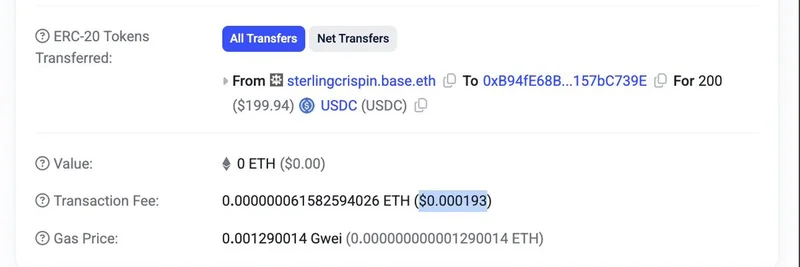
Artist and developer Sterling Crispin wasn't having it. In a thread that's racking up likes and replies, he shared his own experience sending $200 in USDC on Base—Coinbase's Ethereum Layer 2 powerhouse designed for low-cost, high-speed dApps.
Check this out: His total transaction fee? A microscopic $0.000193. That's 0.00009% of the amount. And get this—it would've been the exact same whether he sent $1 or $100 million. Why? Because in blockchain land, fees aren't percentage-based; they're tied to computational effort (aka gas). Transferring USDC is a simple smart contract call—super efficient, especially on optimized chains like Base.
Sterling's mic-drop moment: "Charging 1.5% simply to send USDC is ludicrously unreasonable." Oof. He even joked about duct-taping Stripe's pricing team to the ceiling. The thread exploded with agreement, from crypto vets calling it "rinsing the suckers" to reminders that Stripe's competing with its own 2.9% + $0.30 card fees, not blockchain's pennies.
Scaling It Up: The Million-Dollar Horror Story
To drive the point home, Sterling followed up with another screenshot from Etherscan. This one? A whale moving $1,654,587.65 in USDC on Base—for a fee of just $0.000412. Four hundredths of a cent!
Under Stripe's model? That transfer would've cost $24,818. Nearly 25 grand vanished into the ether (pun intended) for... processing a digital token. It's like charging tolls on a superhighway based on your car's sticker price instead of traffic.
For non-crypto folks peeking in: Blockchain fees reward the network's validators for securing the transaction. No middlemen skimming percentages—just pure, decentralized efficiency. Base, built on Optimism's OP Stack, cranks this up with rollups that batch transactions off-chain, slashing costs without skimping on Ethereum's security.
Why This Hits Meme Coins Where It Hurts (and Helps)
At Meme Insider, we're all about spotting how tech shifts ripple through the wild world of meme tokens. This fee fiasco? It's a textbook case.
Trading Frenzy on a Budget: Meme coins like PEPE or DOGE thrive on high-volume, low-stakes trades. On Base, you can snipe a dip or ape into a pump for fractions of a cent. Stripe's 1.5%? That kills micro-trades dead—imagine losing 1.5% every time you flip a $10 bag of tokens. No wonder retail traders stick to wallets like MetaMask or Rainbow.
DeFi and Stablecoin Swaps: Tools like Uniswap on Base let you swap USDC for meme gems with gas fees under $0.01. Stripe's entry is great for fiat on-ramps, but layering 1.5% on stablecoin sends? It pushes users toward pure on-chain solutions, boosting adoption of DEXs and yield farms.
The Meme Angle: This whole saga screams meme potential. Picture "Stripe Fee" tokens mocking legacy finance or "Base Gas" utilities rewarding low-fee liquidity providers. We've seen it before—remember how SHIB's burn mechanics went viral? Expect copycats lampooning TradFi greed.
Broader Vibes: TradFi vs. Crypto's Fee Wars
Don't get it twisted—Stripe's not the villain here; they're bridging worlds. KYC, compliance, and insurance aren't free, as one commenter noted. But in a post-2025 world where [BlackRock's tokenized funds](https://www.blackrock.com/us/individual/products/ tokenized-assets) are live on Ethereum, users deserve options. Why not hybrid models? Pay Stripe for fiat conversion, then ride Base rails for the rest.
This thread highlights crypto's killer app: permissionless efficiency. As Jesse Pollak (Base's head honcho) has preached, chains like Base aren't just cheaper—they're scalable for everything from meme launches to global remittances.
What's Next for Meme Token Traders?
Keep an eye on Base's ecosystem. With fees this low, it's primed for the next meme supercycle. Pro tip: Bridge your USDC over via Base Bridge and start experimenting—your wallet will thank you.
What do you think— is Stripe's fee a fair trade for ease, or just another cash grab? Drop your takes in the comments, and if you're hunting alpha on meme coins, subscribe to Meme Insider's newsletter for daily drops.
Stay aped, friends. 🚀