 Meme Insider
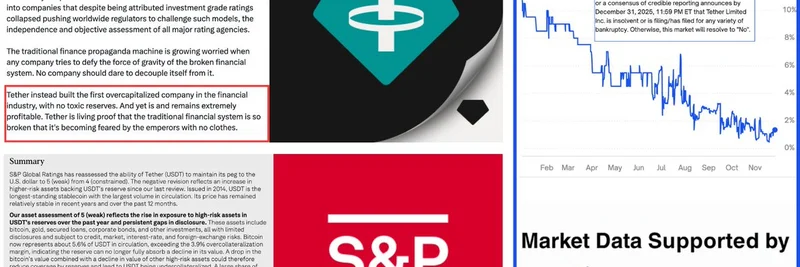
In the ever-evolving world of cryptocurrency, stablecoins like Tether (USDT) play a crucial role, acting as a bridge between volatile digital assets and the stability of fiat currencies. Recently, Tether found itself in the spotlight after S&P Global Ratings downgraded its assessment of USDT's stability. But Tether's CEO, Paolo Ardoino, isn't taking it lying down. In a fiery response shared on X, Ardoino called out the traditional financial system as "broken" and suggested that rating agencies are starting to fear innovative players like Tether.
The drama unfolded when S&P reassessed Tether's ability to maintain its peg to the U.S. dollar, dropping it to a weaker rating due to concerns over asset reserves and disclosure gaps. According to the report, Tether's reserves include high-risk assets, and there's a lack of full transparency that could expose it to potential issues. This isn't the first time Tether has faced scrutiny—over the years, questions about its backing have sparked debates in the crypto community.
Ardoino's retort, highlighted in a post by @DegenerateNews, pulls no punches. He argues that legacy rating models, designed for traditional banks and institutions, fail to capture the strengths of blockchain-based innovations. "Tether is living proof that the traditional financial system is so broken that it's becoming feared by the emperors with no clothes," Ardoino stated, referencing the famous fairy tale to imply that established finance is hiding its vulnerabilities.
He emphasizes Tether's overcapitalized structure, with no toxic reserves, and its continued profitability. Unlike many traditional firms that have collapsed despite high ratings, Tether has defied expectations by building a robust, independent model. This response resonates deeply in the crypto space, where many see stablecoins as a disruptor to outdated banking systems.
Adding an intriguing layer, prediction market platform Polymarket shows just a 1% chance of Tether becoming insolvent in 2025. These odds, driven by community bets, suggest that despite the downgrade, market participants remain confident in USDT's resilience. Polymarket, known for its decentralized betting on real-world events, often provides a crowd-sourced perspective that contrasts with institutional views.
For meme token enthusiasts and blockchain practitioners, this saga underscores the importance of stablecoins in the ecosystem. USDT is a staple for trading meme coins on platforms like Solana or Ethereum, offering liquidity without the volatility of assets like Bitcoin or Ether. Any perceived instability in Tether could ripple through to meme markets, affecting pumps, dumps, and overall sentiment.
Why the Downgrade Matters
Stablecoins are designed to hold a steady value, typically 1:1 with the USD. S&P's concerns stem from Tether's reserve composition, which includes secured loans, corporate bonds, and other investments. While Tether publishes attestations from accounting firms, critics argue for more audited transparency to build trust.
Ardoino counters that Tether's model is superior, pointing to its growth and utility. With a market cap exceeding $100 billion, USDT is the most widely used stablecoin, powering transactions across DeFi, NFTs, and yes, meme token launches.
Polymarket's Take: Low Risk Ahead
The 1% insolvency odds on Polymarket reflect optimism. Users stake crypto on outcomes, and the market adjusts based on collective wisdom. This low probability aligns with Tether's track record of maintaining its peg through market turmoil, like the 2022 crypto winter.
If you're betting on crypto's future, tools like Polymarket offer a fun, insightful way to gauge sentiment. For meme insiders, it's a reminder to diversify holdings and stay informed on stablecoin health.
Implications for Meme Tokens
Meme tokens thrive on hype and liquidity, often paired with USDT on exchanges. A stable Tether means smoother trading for favorites like Dogecoin or newer Solana-based memes. If traditional ratings agencies continue clashing with crypto innovators, it could accelerate the shift toward decentralized alternatives.
As blockchain evolves, stories like this highlight the tension between old and new finance. Tether's defiance might just inspire the next wave of meme-driven projects that challenge the status quo.
Stay tuned to Meme Insider for more updates on how these developments impact your favorite tokens. Whether you're a degen trader or a long-term holder, understanding stablecoin dynamics is key to navigating the crypto landscape.