Meme Insider
If you've been trading meme coin perpetual futures (perps) lately, you might have woken up to a nasty surprise: your winning position suddenly closed out due to something called "auto-deleveraging" or ADL. This phenomenon hit hard on October 10, 2025, affecting popular meme tokens like WIF, DOGE, PUMP, FARTCOIN, PENGU, and HYPE. But what exactly is ADL, and why does it exist? Let's break it down based on an insightful thread from crypto expert Doug Colkitt (@0xdoug).
The Recent ADL Wave in Meme Coins
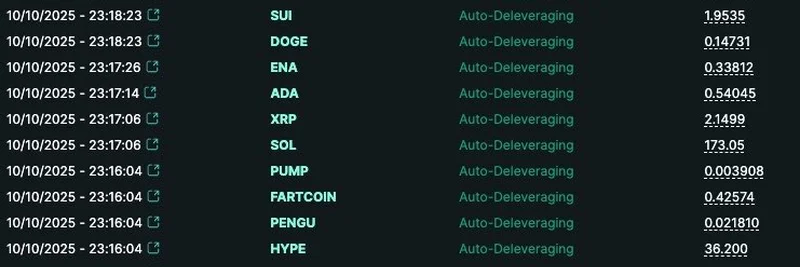
On October 10, 2025, a series of auto-deleveraging events swept through several perp markets, particularly impacting meme coins known for their high volatility. As seen in the screenshot above, coins like DOGE (Dogecoin), WIF (dogwifhat), PUMP (pump.fun token), FARTCOIN, PENGU, and HYPE were among those affected. These events occurred in quick succession, with prices ranging from fractions of a cent to higher values like SOL at 173.05 and AVAX at 22.075.
This isn't just random bad luck—it's a built-in mechanism in perp trading platforms like Hyperliquid to maintain balance in the system. If you're new to perps, think of them as contracts that let you bet on the price of a crypto asset without owning it, using leverage to amplify gains (or losses). But when things get extreme, ADL kicks in to prevent the whole system from breaking.
What Are Perpetual Futures, Anyway?
To understand ADL, we need to zoom out on how perps work. At their core, perpetual futures markets aren't about holding actual tokens like BTC or DOGE—they're about shuffling cash around based on price movements. There's a big pool of margin (cash) deposited by traders, split between longs (betting the price goes up) and shorts (betting it goes down).
As Doug explains, longs and shorts must balance each other out perfectly. When the price moves, money flows from losers to winners. But if one side runs out of margin (gets liquidated), the system needs to rebalance. Normally, this happens through the order book—someone else steps in to take the position. But in wild markets, like those meme coins often experience, liquidity can dry up.
The Liquidation Waterfall: From Order Book to Insurance Fund
When a position is liquidated, the exchange tries to close it out fairly:
- Order Book Absorption: The liquidated position is sold (or bought) on the open market. If there's enough liquidity, a new trader takes over, injecting fresh capital.
- Insurance Fund (or Vault): If the order book can't handle it without excessive slippage, the exchange's insurance fund steps in. This is a pool of capital that absorbs the risk. Interestingly, these funds can be profitable—Hyperliquid's vault reportedly made $40 million in one hour during the recent event.
But even insurance funds have limits. When they're tapped out or unwilling to take more risk, we hit the last resort: auto-deleveraging.
Auto-Deleveraging: The Last Resort
ADL is like an overbooked flight where volunteers aren't enough, so the airline forcibly removes passengers. In perps, if longs are wiped out and no new longs want in, the system forces some shorts to close their positions—without paying them extra.
Exchanges prioritize who gets deleveraged based on factors like:
Profitability: The most profitable positions first.
Leverage: Higher leverage means higher risk.
Size: Bigger positions are targeted.
This often hits the "whales" hardest, as they're the ones with massive gains. For meme coin traders, this is crucial because these tokens can pump or dump wildly, leading to one-sided markets where everyone piles into longs during a hype cycle, only for ADL to kick in when the losers dry up.
Why ADL Feels Unfair (But Is Necessary)
It's frustrating to get forced out when you're winning big—imagine crushing every poker table in a casino until there are no more opponents left. That's ADL in action. Perps are zero-sum games: someone has to lose for others to win. Without ADL, the system could become imbalanced, leading to bigger problems like exchange insolvency in extreme cases.
For meme tokens, which thrive on hype and FOMO, ADL events highlight the risks of over-leveraged trading. Tokens like FARTCOIN or PENGU can see explosive growth, but that same volatility can trigger mass liquidations and ADL.
Lessons for Meme Token Traders
If you're diving into meme coin perps, here's what to take away:
Monitor Leverage: High leverage amplifies ADL risk. Stick to lower levels to avoid being prioritized.
Watch Market Sentiment: One-sided markets (all longs or all shorts) are red flags for potential ADL.
Diversify: Don't put everything into one hype-driven token. Spread across stables and volatiles.
Stay Informed: Follow experts like Doug Colkitt for deep dives. Check out the full thread here for more analogies, including a Truman Show reference to the "edge of the simulation."
In the wild world of meme coins, understanding mechanics like ADL can save your portfolio. Trade smart, and remember: in perps, it's all about that balanced pile of cash. For more insights on meme tokens and blockchain tech, keep exploring Meme Insider.