 Meme Insider
In the fast-paced world of Solana DeFi, innovative strategies are constantly emerging to help users maximize yields while minimizing risks. A recent tweet from Bradydon, co-founder of HawkFi, highlights one such approach: using their MCU strategy to "print" $MON tokens. If you're into liquidity providing (LP) on Solana, this could be a game-changer, especially for tokens like $MON from the Monad ecosystem.
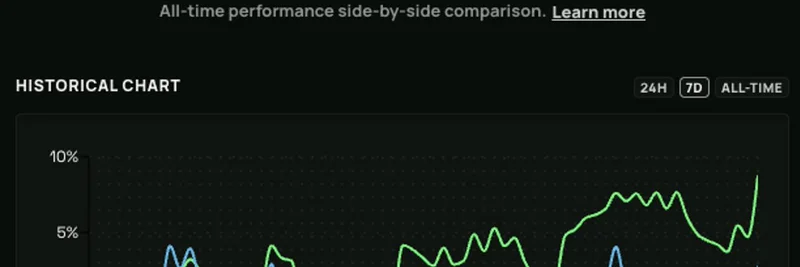
Bradydon's post showcases a performance chart for the MON-USDC pair, demonstrating impressive gains through a carefully tuned LP setup. Let's break it down and see why this matters for anyone looking to enhance their blockchain portfolio.
What is HawkFi's MCU Strategy?
MCU stands for Multiday Cook Up, an automated liquidity providing strategy designed for tokens where you have medium to long-term bullish conviction. Unlike short-term trades that chase quick pumps, MCU focuses on steady accumulation over days or weeks. It's particularly suited for larger-cap tokens on Solana, where volatility can be high but trends often play out over time.
The core of this strategy involves:
- Tight-range DLMM on Meteora: DLMM, or Dynamic Liquidity Market Maker, is a feature from Meteora, a Solana-based DEX aggregator. It allows for concentrated liquidity in specific price ranges, similar to Uniswap V3 but optimized for Solana's speed. By keeping the range tight, you capture more trading fees from volume within that band.
- Directional Autorebalance (Up-Only): This is where the magic happens. HawkFi's automation rebalances your position to favor upward price movements. If the token price dips, it buys more at lower levels (buying the dip, or DIP protection). As prices recover and climb, it sells incrementally to lock in profits, all while maintaining exposure to the upside.
- IL Protection: Impermanent loss (IL) is the bane of LP providers—it's the potential loss from price divergence compared to just holding the assets. MCU mitigates this by dynamically adjusting positions, ensuring you're not left holding the bag during big swings.
In the tweet, Bradydon notes that MCU is "perfect for multiday LP on large-cap tokens." $MON, as the native token of Monad—a high-performance Layer 1 blockchain aiming to blend Solana's speed with Ethereum's compatibility—fits this bill. Launched recently via Wormhole's Sunrise on Solana, $MON has seen strong initial trading volume, making it ideal for fee generation.
Why This Strategy Shines for $MON
$MON's launch was a big event, with an airdrop worth over $105 million and day-one trading on Solana platforms like Jupiter. According to data from CoinMarketCap, $MON is trading around $0.01 USD with solid liquidity. But in the meme and DeFi space, where pumps and dumps are common, straight holding can be risky.
Enter MCU: The chart in the tweet shows an LP gain of +8.76%, outperforming simply holding the pair (+0.22%) or just $MON (+2.81%). Over the all-time view, the strategy has consistently stayed above the baseline, thanks to fee accrual and smart rebalancing. For blockchain practitioners, this means:
- Yield Boost: Earn fees from trades in the MON-USDC pool while accumulating more $MON.
- Risk Management: DIP and IL protections help weather volatility, crucial for newer tokens like $MON that might experience post-launch corrections.
- Automation: HawkFi handles the heavy lifting, so you don't need to monitor charts 24/7.
If you're familiar with Solana's ecosystem, tools like this build on protocols from Meteora and integrate seamlessly with wallets for easy setup.
Getting Started with MCU on HawkFi
To replicate this for $MON or similar tokens:
- Head to HawkFi.ag and connect your Solana wallet.
- Select the MON-USDC pool on Meteora DLMM.
- Set up an MCU automation: Choose a tight price range around current levels, enable up-only autorebalance, and define your DIP thresholds.
- Deposit your assets and let it run. Monitor via HawkFi's dashboard for performance tweaks.
Remember, while strategies like MCU reduce risks, DeFi always carries potential for loss—do your own research and start small.
This tweet from Bradydon isn't just hype; it's a practical tip for leveling up your LP game on Solana. As meme and utility tokens like $MON continue to bridge ecosystems, tools like HawkFi's MCU will be key to staying ahead. Stay tuned to Meme Insider for more insights on emerging DeFi tactics.