 Meme Insider
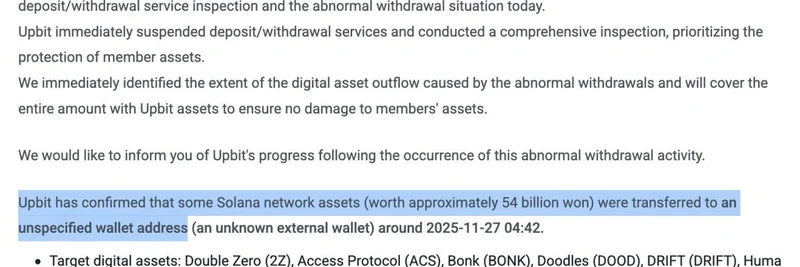
In the fast-paced world of crypto, security breaches can shake even the biggest players. Today, we're diving into a recent incident at Upbit, one of South Korea's leading cryptocurrency exchanges. A tweet from @hashminutes broke the news: Upbit has been hacked, with around 54 billion Korean won (roughly $38 million USD) worth of tokens transferred to unauthorized wallets. But here's the silver lining—Upbit is covering all losses from its own reserves, ensuring no user funds are affected.
What Happened in the Upbit Hack?
According to the official statement from Upbit's CEO, Oh Kyung-seok, the exchange detected abnormal withdrawal activity early on November 27, 2025. They quickly suspended deposit and withdrawal services to investigate and protect user assets. The hack specifically targeted assets on the Solana network, a blockchain known for its speed and low fees, which has become a hotspot for meme tokens.
The unauthorized transfers happened around 4:42 AM, involving a mix of established coins and trendy memes. Upbit has assured users that they'll reimburse the full amount using their own assets, so if you're holding any of these on the platform, your balance should remain intact.
The Targeted Tokens: A Meme-Heavy List
The hack hit a variety of Solana-based tokens, but meme coins stole the spotlight in this lineup. Meme tokens are digital assets inspired by internet jokes, animals, or cultural phenomena, often gaining traction through social media hype rather than traditional utility. Here's a breakdown of the affected ones, with a focus on the memes:
- BONK ($BONK): The Shiba Inu-inspired dog coin on Solana, famous for its community-driven burns and airdrops.
- Cat in a Dog World ($MEW): A playful cat-themed token flipping the script on dog dominance in crypto memes.
- MOODENG ($MOODENG): Based on Moo Deng, the viral baby pygmy hippo from Thailand that's captured hearts online.
- Fudge Penguin ($PENGU): A penguin meme token waddling into the scene with fun, community-focused vibes.
- Official Trump ($TRUMP): A politically charged meme tied to the former U.S. president, often riding waves of election buzz.
Other notable non-meme tokens included Solana ($SOL) itself, stablecoin USDC, and infrastructure plays like Jupiter ($JUP) for swaps, Pyth Network ($PYTH) for oracles, and Wormhole ($W) for cross-chain bridges. The full list also features Double Zero ($ZZ), Access Protocol ($ACS), Doodles ($DOOD), DRIFT ($DRIFT), Huma Finance ($HUMA), Ionet ($IO), Jito ($JTO), Solaire ($LAYER), Magic Eden ($ME), ORCA, Radium ($RAY), Render Token ($RENDER), SonicSVM ($SONIC), and SOON.
This mix highlights how meme tokens, while volatile and fun, are increasingly part of major exchange ecosystems—and unfortunately, attractive targets for hackers.
Why Meme Tokens on Solana?
Solana's ecosystem has exploded with meme coins thanks to tools like Pump.fun, which make launching new tokens a breeze. These assets often pump hard on hype but can dump just as fast. The hack underscores the risks in this space: while exchanges like Upbit prioritize security, no system is foolproof. For blockchain practitioners, it's a reminder to use hardware wallets for long-term holdings and enable two-factor authentication everywhere.
Upbit's quick response—suspending services and committing to cover losses—shows why they're a trusted name in crypto. As the investigation continues, we'll keep an eye on any updates. If you're trading memes, stay vigilant and diversify.
For more insights on meme tokens and crypto news, check out our knowledge base at Meme Insider. What do you think about this hack—could it impact Solana's meme meta? Share your thoughts in the comments!