Meme Insider
In the fast-evolving world of blockchain and decentralized tech, mini apps are emerging as a game-changer, especially on platforms like Base. A recent post from product builder Ali Tiknazoglu highlights this shift, urging developers to embrace mini apps as the next big "app store moment." Base, an Ethereum layer-2 network built by Coinbase, is fostering an ecosystem where these lightweight applications thrive, bypassing the headaches of traditional app development.
Tiknazoglu's insight comes in response to an update from Base's DevRel, Sohey, who announced that mini apps now support screenshots in listings on the @baseapp platform. This feature makes it easier for builders to showcase their creations, with featured apps requiring visuals to stand out. You can check out the demo video in Sohey's original post here.
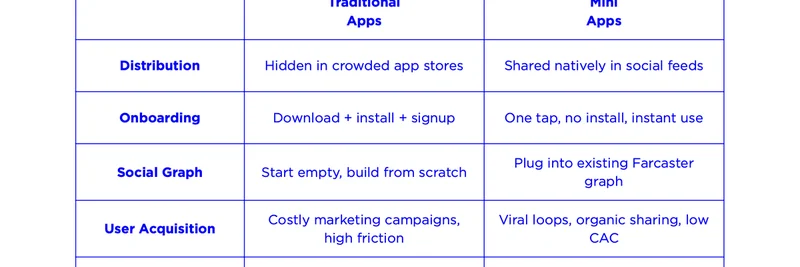
What makes mini apps so appealing? Tiknazoglu breaks it down with a straightforward comparison to traditional apps, emphasizing how they lower barriers and boost efficiency.
Let's unpack this table step by step. First, on distribution: Traditional apps often get lost in overcrowded app stores like Google Play or Apple's App Store, where discoverability is a constant battle. Mini apps, however, spread organically through social feeds—think sharing a link on platforms integrated with Base or Farcaster, a decentralized social protocol. This native sharing taps into existing networks, making it easier for users to find and try them out.
Next, onboarding. Getting users into a traditional app involves downloads, installations, and sign-ups, which can lead to high drop-off rates. Mini apps flip the script with one-tap access—no installs needed, just instant use. This frictionless entry is perfect for blockchain users who value speed and simplicity.
Social graph integration is another win. Traditional apps start from zero, forcing developers to rebuild user connections from scratch. Mini apps plug directly into established graphs like Farcaster's, leveraging pre-existing relationships for immediate community engagement. Farcaster, for those new to it, is a blockchain-based social network where users own their data and identities, making it a natural fit for Base's ecosystem.
User acquisition follows suit. Traditional methods rely on expensive marketing campaigns with lots of hurdles, driving up customer acquisition costs (CAC). Mini apps encourage viral loops through organic sharing, keeping CAC low and growth exponential—ideal for meme token projects or any viral blockchain initiative.
Finally, development. Building for iOS and Android separately means dealing with multiple codebases and lengthy approval processes from app stores. Mini apps are essentially lightweight web apps, deployable permissionlessly on the blockchain. This means faster iterations and no gatekeepers, aligning perfectly with the ethos of decentralized tech.
For meme token enthusiasts and blockchain practitioners, this trend opens doors to innovative tools. Imagine mini apps that let users mint, trade, or meme-ify tokens directly in social feeds, all without leaving their wallet ecosystem. As Base continues to grow, features like screenshot support signal a maturing platform ready for mainstream adoption.
If you're a builder, now's the time to experiment with mini apps on Base. Dive into the docs mentioned in Sohey's update and start prototyping— the future of app distribution might just be smaller, smarter, and more social. Stay tuned to Meme Insider for more insights on how these developments intersect with the wild world of meme tokens.