Meme Insider
In the fast-paced world of crypto, where speculation often drives the narrative, a recent tweet from Mert, CEO of Helius Labs, sheds light on an intriguing development for ZEC (Zcash). Known for its focus on privacy through advanced cryptography, ZEC is making waves not just for its tech but for its trading volume on Hyperliquid's perpetual futures (perps) market. Let's break down what this means and why it's a big deal for privacy coins.
ZEC's Surprising Rank in Perps Trading
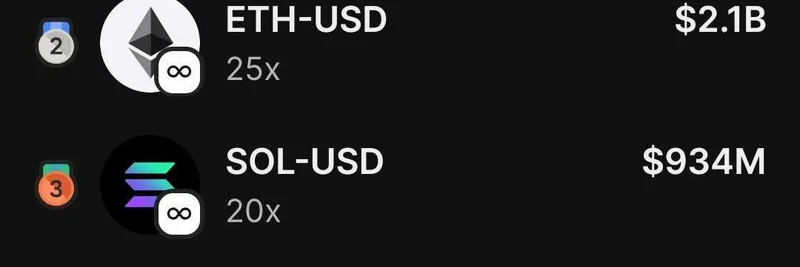
Hyperliquid, a popular decentralized exchange for perpetual contracts, lists assets based on trading volume. Perpetual futures, or perps, are derivatives that let traders bet on price movements without owning the underlying asset—think leveraged trading that never expires. In Mert's screenshot, ZEC ranks fifth in volume, trailing giants like BTC, ETH, SOL, and even HYPE.
What's eye-opening? ZEC isn't even in the top 10 by market cap—it's barely scraping the top 30 on sites like CoinMarketCap. Yet here it is, rubbing shoulders with the big boys in speculation. As Mert points out, this suggests that while privacy might be ZEC's core feature, price action is what's drawing the crowd right now.
The Privacy-Speculation Symbiosis
Mert argues that speculation isn't the enemy of privacy—it's an ally. In crypto, "flows" refer to the money pouring in and out of an asset. More trading means more liquidity and attention, which for ZEC translates directly to better privacy.
How? Zcash uses something called a shielded pool, a collective pot where transactions are anonymized using zero-knowledge proofs (zk-proofs). These are mathematical tricks that prove a transaction is valid without revealing details like sender, receiver, or amount. The bigger the shielded pool, the harder it is to trace anything—it's like hiding in a massive crowd versus a small group.
And guess what? Increased speculation pumps up that pool. Mert shared a chart showing ZEC's shielded pool "going vertical," meaning it's growing rapidly as more people trade and use the network.
This creates a positive feedback loop: More speculators bring more flows, which beef up the shielded pool, making the privacy stronger. Stronger privacy attracts more users (including those who actually need it, like for secure transactions), which in turn draws even more speculation. It's a win-win, especially when ZEC looks undervalued compared to some overhyped projects ahead of it in rankings.
Why This Matters for Meme Tokens and Beyond
At Meme Insider, we usually dive into the wild world of meme coins, where hype and community drive everything. But ZEC's story echoes that: Speculation isn't just gambling; it's fuel for growth. Privacy coins like ZEC could inspire meme projects that incorporate anonymity features, blending fun with real utility. Imagine meme tokens with built-in zk-proofs—private pumps without the public scrutiny.
Mert wraps it up nicely: Privacy adoption won't come from purists alone. In crypto, believers and speculators need to team up. ZEC's top-5 perps status, despite its market cap lag, shows this in action. If you're eyeing privacy plays or just love spotting undervalued gems, keep ZEC on your radar.
For the full thread and context, check out the original post on X. What's your take—will speculation propel ZEC back to the top 10? Drop your thoughts in the comments!